
SCADA Applications
Environmental Monitoring System: Why It Is Essential Today
An environmental monitoring system is defined as a system capable of collecting, tracking, and measuring environmental factors such as air, soil, and water. This enables environmental management agencies and researchers to monitor, assess, and make accurate decisions for effective environmental management and protection.
An environmental monitoring system is defined as a system capable of collecting, tracking, and measuring environmental factors such as air, soil, and water. This enables environmental management agencies and researchers to monitor, assess, and make accurate decisions for effective environmental management and protection.
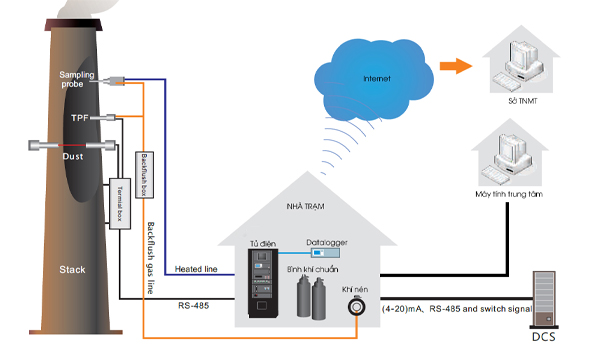
Using an environmental monitoring system plays a crucial role in protecting and managing the natural environment. Below are some key reasons why an environmental monitoring system should be used:
Capable of measuring air pollutants, including fine particulate matter, CO2, NO, and other harmful substances. This enables environmental authorities to easily track air quality and implement necessary measures to improve conditions, reducing negative impacts on the environment and human health.
Provides data on rainfall, water levels, and input–output water quality. This supports effective water resource management, enables early prediction of droughts and floods, and ensures a clean water supply for residential use, construction projects, and other essential needs.
Biodiversity and Ecosystem Protection
An environmental monitoring system tracks changes in the natural environment, including monitoring the appearance and disappearance of plant and animal species. This helps protect critical areas and preserve the ecosystem.
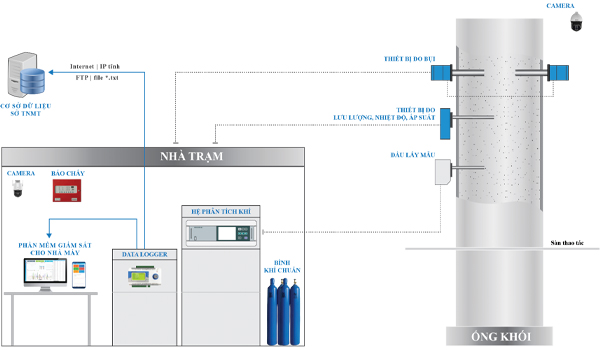
An environmental monitoring system provides essential data for research, prediction, and early warning of natural disasters such as earthquakes, landslides, and storms. This enables timely preparation and rapid response, helping to minimize damage to property and protect human lives.
Data supports research activities. This helps people better understand the impact of human activities on the environment and develop effective solutions for environmental protection.
It can be said that plays a critical role in protecting the environment and human health. At the same time, this provides essential baseline information to support research and environmental education.
Key Components
A modern typically consists of several core components that work together to deliver accurate and real-time data:
- Sensors and Devices: Measure environmental parameters such as temperature, humidity, air quality, and water quality.
- Data Acquisition Systems: Collect and transmit data from sensors to central platforms.
- Communication Networks: Ensure seamless data transfer through IoT, wireless, or cloud-based technologies.
- Monitoring Software: Analyze, visualize, and store data for reporting and decision-making.
Benefits of Implementing an Environmental Monitoring System
Implementing offers numerous benefits:
- Real-time Monitoring: Continuous tracking of environmental conditions.
- Improved Decision-Making: Data-driven insights for better environmental management.
- Regulatory Compliance: Helps organizations meet environmental standards and policies.
- Risk Reduction: Early detection of environmental risks and hazards.
- Cost Efficiency: Prevents damage and reduces long-term operational costs.
Future Trends in Environmental Monitoring Systems
With the rapid advancement of technology, evolving significantly:
- Integration with IoT and AI: Enhancing automation and predictive analytics.
- Cloud-Based Platforms: Enabling remote monitoring and scalable data storage.
- Smart Sensors: Providing higher accuracy and lower energy consumption.
- Big Data Analytics: Supporting deeper insights into environmental patterns and trends.
Conclusion
ATSCADA - Providing ATSCADA software - The monitoring and data acquisition control system is the appropriate choice for integrated system projects, IoT, smart city projects, agriculture 4.0... Is trusted by many customers.
Related posts
Power SCADA System
Is it promising to apply a Power SCADA system in the power industry? The advantages [...]
Apr
Power Monitoring System Upgrade in Myanmar with ATSCADA
We are proud to announce our new partnership with Logic Master Co., Ltd, our official [...]
Oct
Wood Manufacturing SCADA System for Factory Automation
Wood Factory Digitalization has been a priority for many businesses to implement into their operational [...]
Oct
Warehouse Management System (WMS) – Why Businesses Need Digital Transformation
WAREHOUSE DIGITALIZATION is daily increasing because of the great consumer requirements. Customers expect clarity and transparency [...]
Oct
Vaccine Temperature Monitoring for Storage
The Healthcare Industry Digitalization is one of the most explosive digital revolutions at present. Along with [...]
Oct
Digital Transformation in Assembly Manufacturing for Smart Factories
Recently, digitization in assembly factories in particular and digitization in factories in general has been [...]
Oct