
Technical Guides
PLC Communication C# for SCADA Systems: Complete Integration Guide
Connecting PLC with C#?
If a PLC is connected to a computer using programming tools such as Visual Studio .NET (C# or C++), InTouch, Citect, or WinCC, it provides a powerful and flexible solution for industrial automation. In this article, we will explore in detail how to implement PLC communication C# and how this integration enhances SCADA system performance, real-time data acquisition, and industrial control efficiency.
C# is a powerful programming tool widely used in industrial applications. With a unified development strategy, C# is applied across multiple systems, while Visual Studio serves as the standardized development environment for PLC, HMI, SCADA, MES, and ERP projects. Both ATSCADA and PLCPi software (PLC + HMI control solutions) utilize Visual Studio as the core platform, with C# as the primary language to build and implement PLC communication C#, as well as higher-level systems such as MES and ERP.
Today, many PLC manufacturers provide Dynamic Link Libraries (DLLs) to enable seamless connectivity between their PLC devices and external software. These libraries support developers in building custom algorithms and integrating PLC systems efficiently.
Advantages of using Visual Studio for SCADA monitoring:
- Easy database management
- Cross-platform capability (Windows/Linux)
- Cost optimization
In SCADA systems, PLCs (Programmable Logic Controllers) play a critical role in executing logical control functions. They communicate with field devices such as sensors, control panels, and actuators (e.g., valves). PLCs or RTUs continuously monitor input values, detect technical changes, and identify threshold violations.
When predefined limits are exceeded, PLC/RTU systems transmit relevant data to the central station. This approach minimizes unnecessary data transmission, helping reduce network bandwidth usage. Additionally, it enables fast access to critical information and supports efficient communication between remote stations (Slave-to-Slave), enhancing the overall performance of PLC communication C# in industrial automation systems.
Today, industrial automation systems utilize computers and communication technologies to automate monitoring and control processes in industry. These systems are responsible for collecting data in complex environments, which must then be presented in a user-friendly manner for operators. This task is supported by advanced graphical resources (Human-Machine Interface – HMI) and multimedia content.
The systems include ATSCADA software with full functionalities for monitoring, control, and system operation, such as:
- Real-time data acquisition
- Historical data storage
- Alarm management
- Graph visualization
- Report generation
PLC communication C# effectively integrates all these capabilities, ensuring reliable data exchange and seamless system performance in industrial environments.
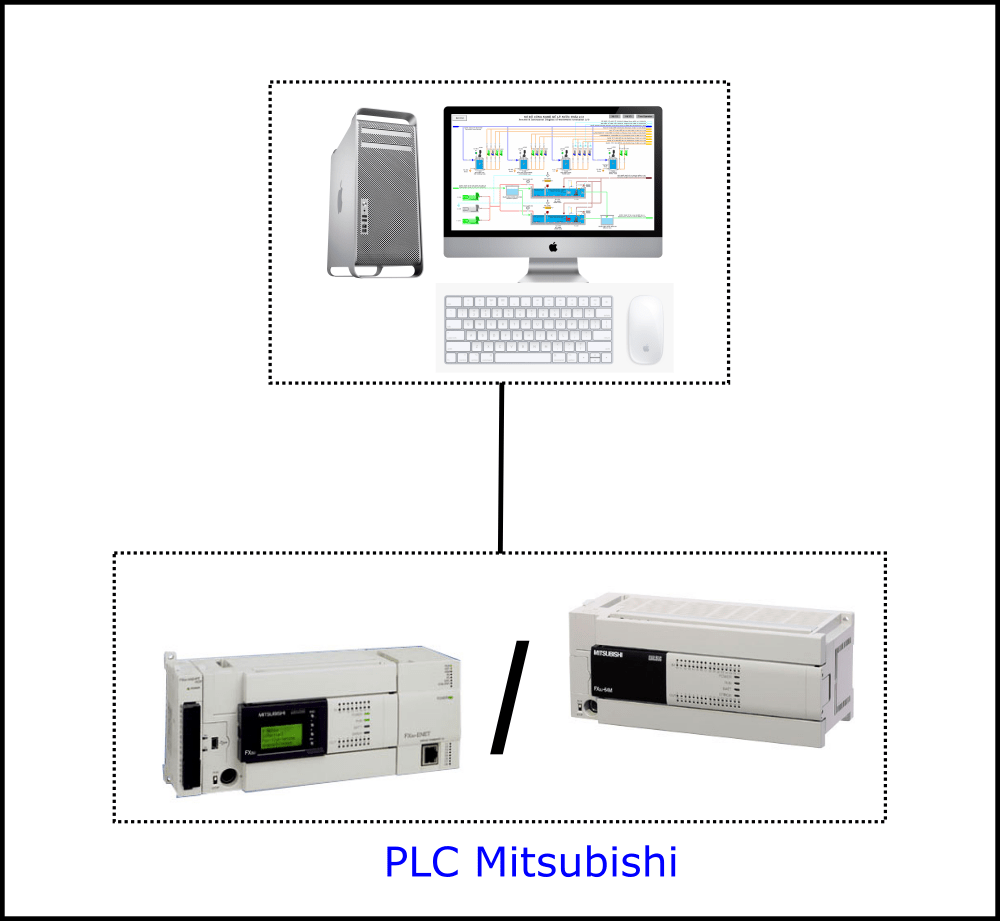
PLC mitsubishi

PLC siemens
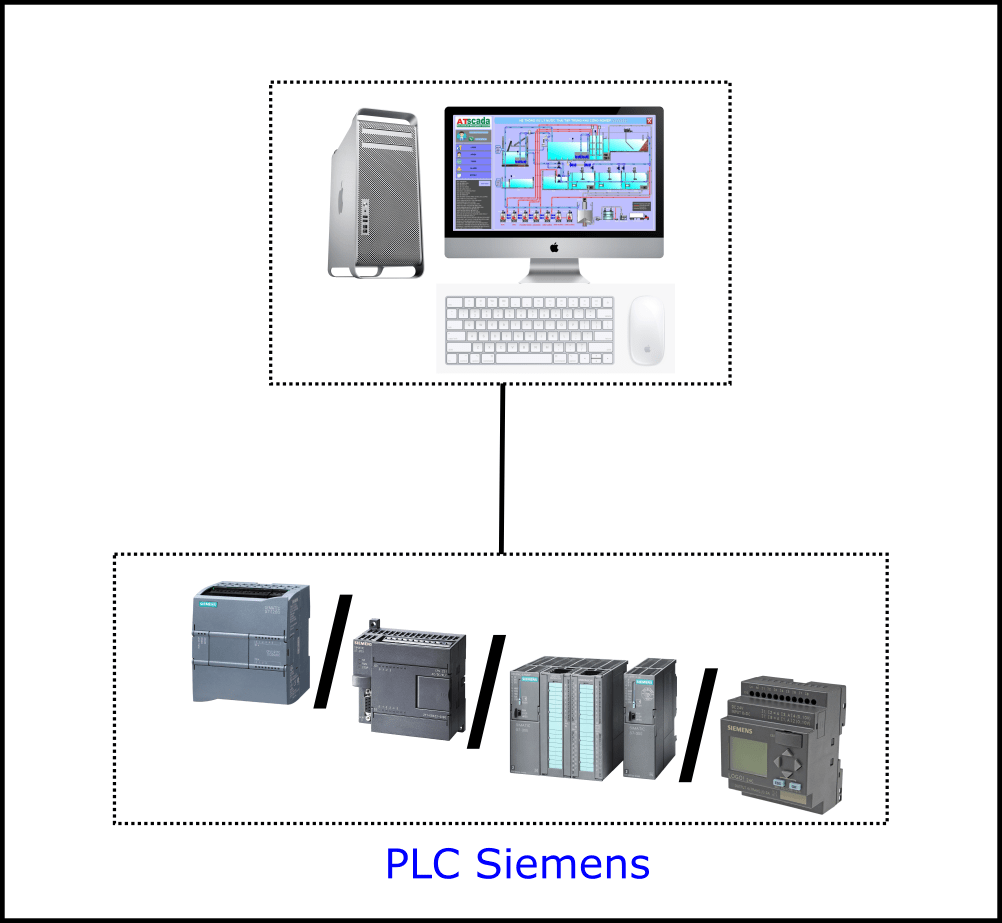
Siemens is a well-known German manufacturer of industrial equipment. PLCs from this brand are characterized by their simplicity, compact design, and durability. The programming software is user-friendly, allowing direct programming on the device interface.
They also come with an integrated Ethernet port, enabling connection to external devices via the RJ45 communication standard. This port can also be used for program download/upload, making it highly convenient for implementing PLC communication C# in industrial systems.
PLC schneider
Schneider Electric manufactures electrical and automation equipment recognized worldwide. The company offers a wide range of PLC product lines widely adopted in the market, including Zelio Logic (smart relays), Twido, Modicon M171/M172, Modicon M221, Modicon M238, Modicon M251, Modicon M258, Modicon MC80, Modicon TSX Micro, and Preventa XPS MF/MC—commonly used in industrial systems implementing PLC communication C#.
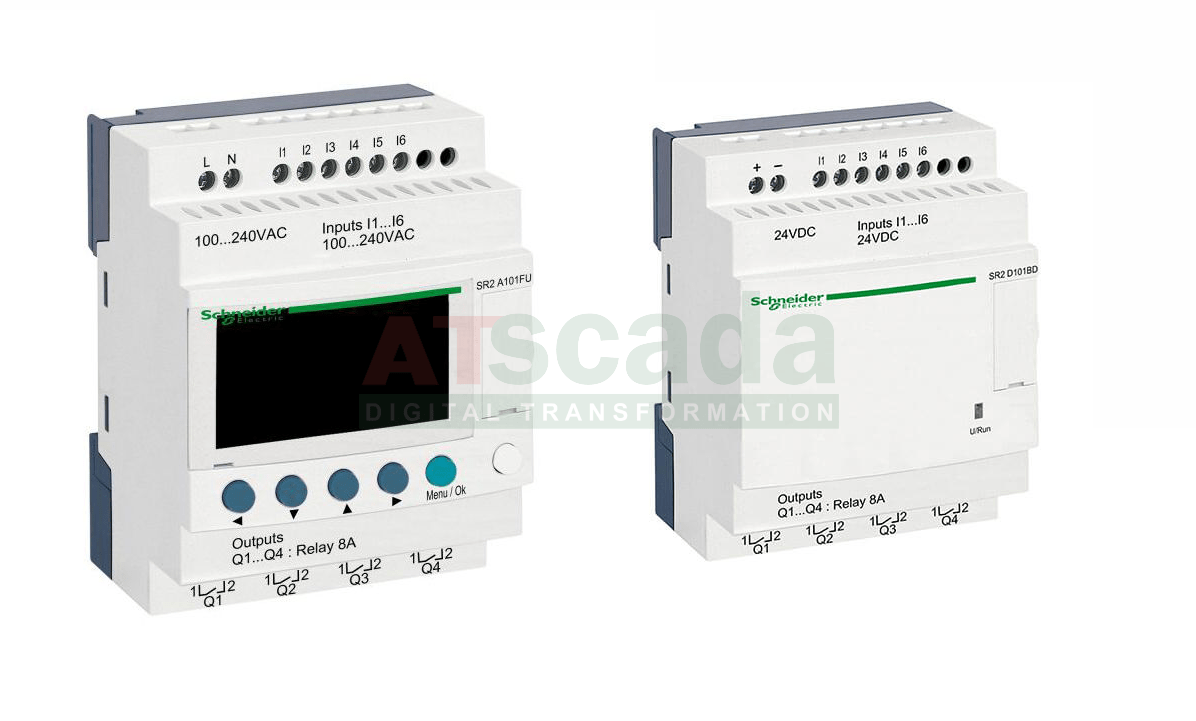 Flexibility in selecting safety functions and more precise diagnostics are just some of the advantages that benefit machine manufacturers, automation system integrators, and end users. These benefits are achieved by integrating innovative solutions, especially when implementing PLC communication C# in modern industrial systems.
Conclusion:
PLCs can be programmed and integrated using C#, which is one of the most popular and widely supported programming languages today. For more complex logic problems, it allows conversion from graphical programming languages into supported software environments. This helps overcome issues such as high licensing costs, large software size, and unnecessary features.
Visual Studio serves as a powerful development tool for building SCADA software and enabling customized PLC communication C# based on specific requirements. Its flexibility effectively meets diverse industrial needs and enhances overall system value.
Hopefully, the information shared by ATSCADA Lab in this article helps you gain a clearer understanding of PLC communication C# in SCADA systems. At the same time, it supports customers in choosing a reliable and professional industrial software provider.
ATSCADA - Providing ATSCADA software - The monitoring and data acquisition control system is the appropriate choice for integrated system projects, IoT, smart city projects, agriculture 4.0... Is trusted by many customers.
Related posts
Domain, Hosting, VPS, Cloud Server & SSL for SCADA Systems (ATSCADA Platform)
In the era of Industry 4.0, deploying SCADA systems on Web and Cloud platforms is [...]
Oct
SSL Certificate for SCADA Web – Secure Your ATSCADA System
Protect Your SCADA Web Data with SSL Encryption Ensure that all data exchanged between your [...]
Oct
Register Domain for ATSCADA Web – Secure & Professional Branding
Domain Registration with Viettel IDC A domain name is the unique address of a website [...]
Oct
Viettel Colocation Services for Cloud SCADA Systems – Secure, Scalable & High-Performance Infrastructure
For large-scale Cloud SCADA and IIoT systems, choosing the right infrastructure is critical to ensure [...]
Oct
Viettel Cloud VPS Server – Secure & Scalable Hosting for Cloud SCADA and IIoT Systems
The Viettel Cloud VPS (Virtual Private Server) service from Viettel IDC is widely trusted for [...]
Oct
ATSCADA Web Hosting Service – Reliable Hosting for SCADA Projects
ATSCADA Web Hosting Powered by Viettel IDC ATSCADA Web Hosting is a specialized hosting service [...]
Oct