
SCADA Applications
Waste Water Treatment Management SCADA System
Introduction to Waste Water Treatment
Waste water treatment is a critical environmental process that removes contaminants, decomposes pollutants, and transforms wastewater into a safe and reusable resource. As urbanization and industrialization continue to grow, the demand for efficient waste water treatment systems has become more important than ever. These systems not only protect natural water bodies but also enable water reuse for agriculture, irrigation, and industrial purposes.
A modern waste water treatment (WWT) plant typically spans a large area and consists of multiple interconnected processes, including physical, chemical, and biological treatment stages. Managing such complex operations requires advanced technology to ensure efficiency, reliability, and cost-effectiveness. This is where SCADA (Supervisory Control and Data Acquisition) systems, particularly the ATSCADA platform, play a vital role.
The Importance of SCADA in Waste Water Treatment
In large-scale waste water treatment facilities, manual monitoring and control are no longer sufficient. SCADA systems provide centralized monitoring and automation, allowing operators to manage the entire plant remotely and in real time.
Implementing a SCADA solution in waste water treatment offers several key benefits:
- Real-time monitoring: Operators can visualize system data instantly through HMI screens, dashboards, and control panels.
- Cost efficiency: Reduced need for manual labor and on-site personnel.
- Improved reliability: Early detection of faults and system anomalies.
- Optimized operations: Automated control enhances treatment efficiency and reduces energy consumption.
- Scalability: Easily expand the system as the plant grows.
The ATSCADA platform is specifically designed to meet the demands of modern waste water treatment systems, providing a powerful and flexible solution for monitoring and control.

Purpose of SCADA Solution in WWT Systems
The primary purpose of integrating SCADA into waste water treatment is to enhance operational efficiency while ensuring environmental compliance. With ATSCADA, facilities can achieve the following objectives:
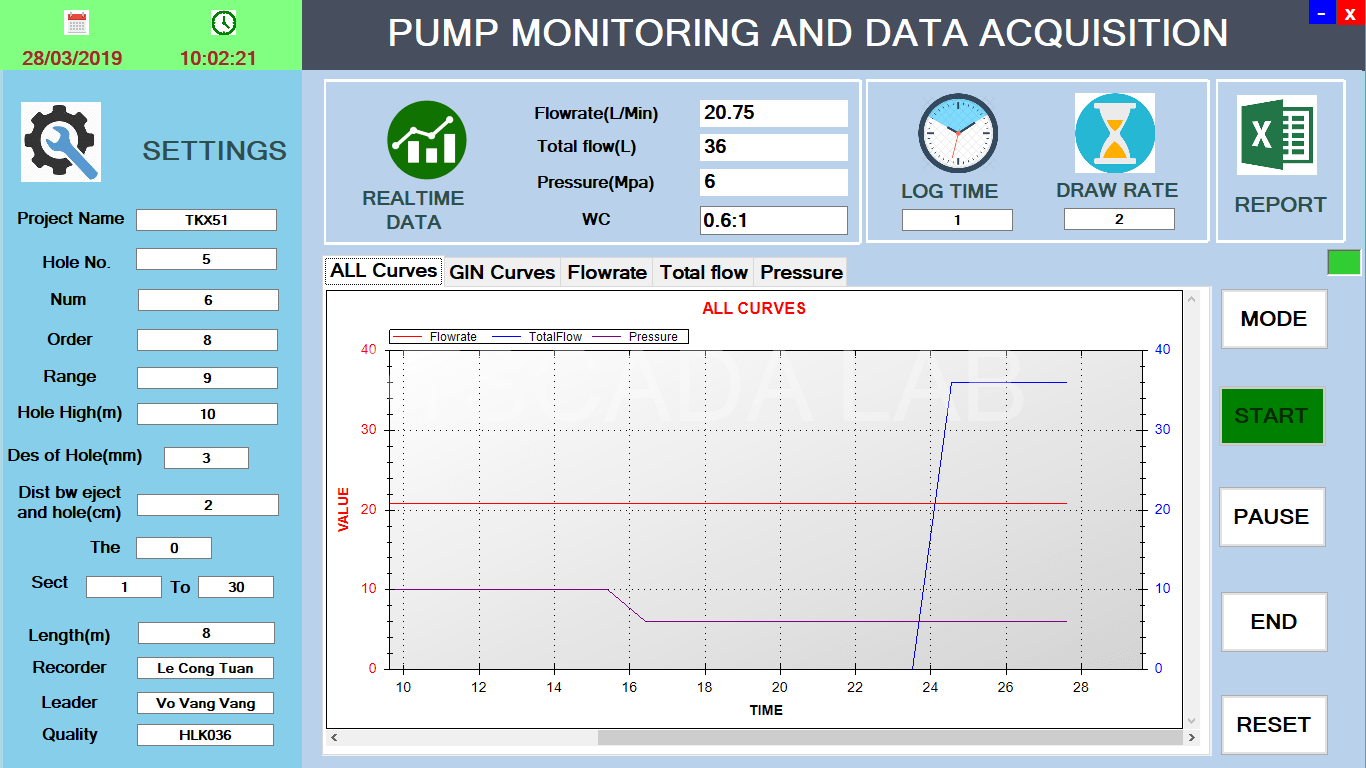
Real-Time Data Visualization
Operators can monitor all system parameters through intuitive HMI interfaces, LCD displays, or web-based dashboards. This includes tracking flow rates, pH levels, pressure, and sludge levels in real time.
Data Collection and Analysis
ATSCADA continuously collects data from field devices and sensors. This data is processed and analyzed to optimize system performance and support decision-making.
Alarm and Event Management
The system automatically triggers alarms when abnormalities occur, such as equipment failure, overflow conditions, or parameter deviations. This ensures quick response and minimizes downtime.
Flexible Remote Management
With remote access capabilities, operators can monitor and control the waste water treatment process from anywhere via web or mobile interfaces.
Data Storage and Reporting
All operational data is securely stored and can be exported into detailed reports. This is essential for compliance, auditing, and performance evaluation.
Advanced SCADA Interface
ATSCADA offers a modern, user-friendly interface with powerful visualization tools, making it easier to manage complex systems efficiently.
Distributed Application
The system supports distributed architecture, allowing multiple control stations to manage different sections of the plant simultaneously.
Overview of WWT Systems
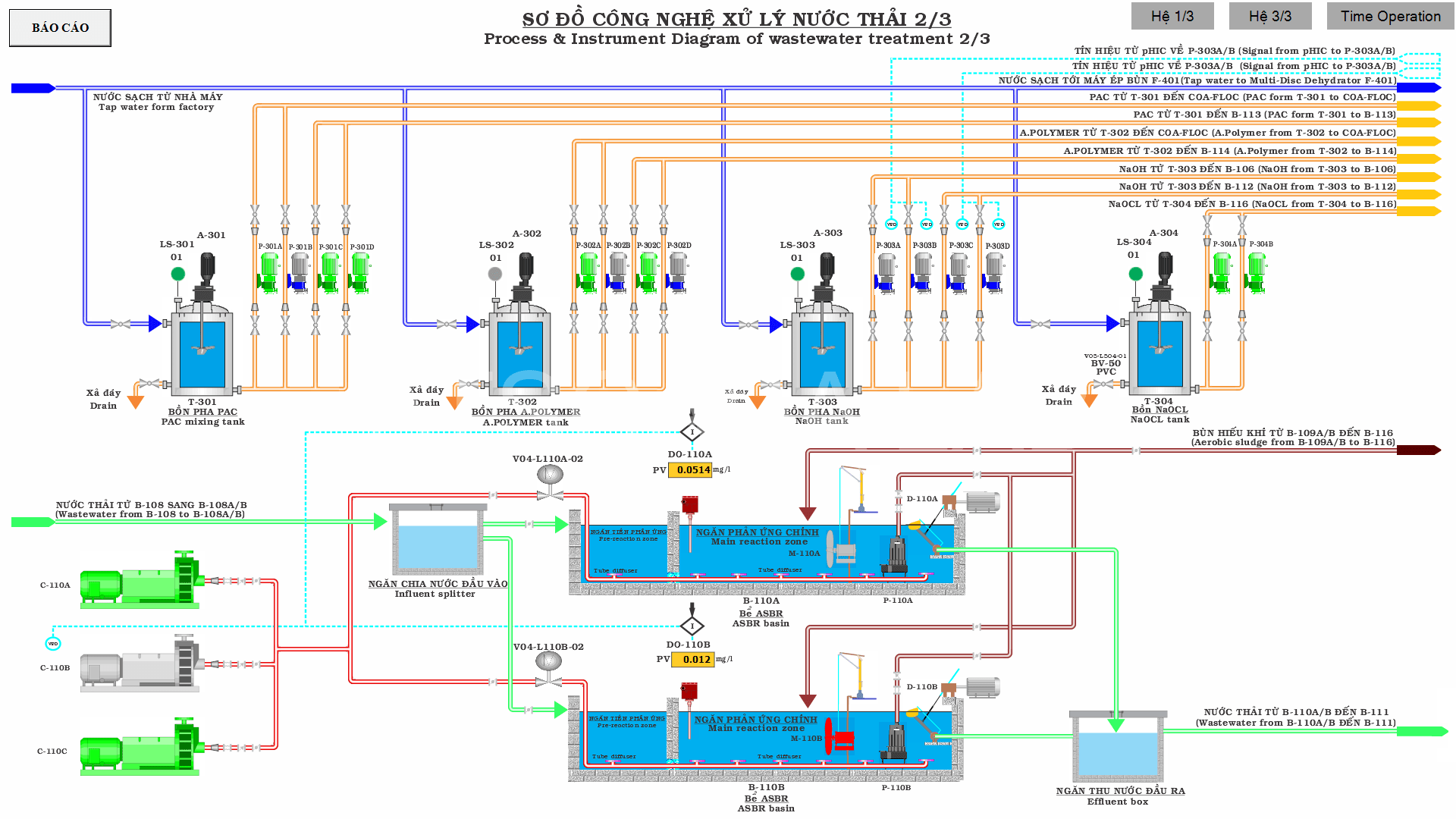
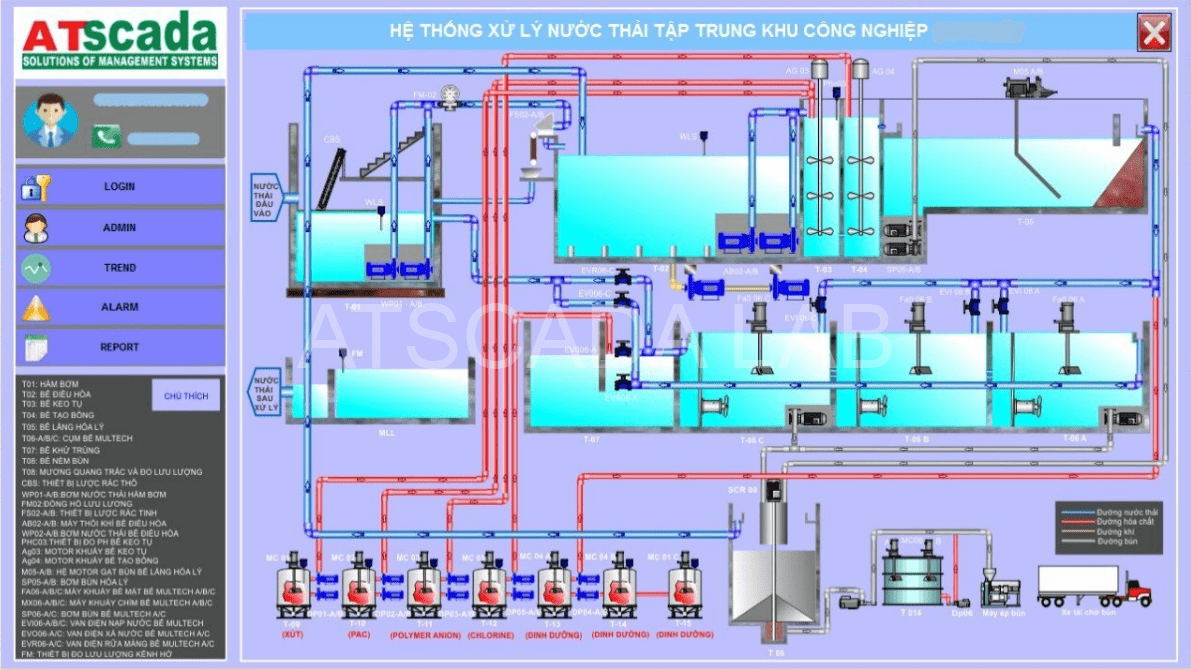
Waste water treatment systems handle both domestic sewage and industrial wastewater, which often contain solid waste, organic matter, and harmful chemicals. Before discharge into the environment or reuse, this wastewater must undergo thorough treatment.
Typical processes in a waste water treatment plant include:
- Preliminary treatment: Removal of large solids and debris.
- Primary treatment: Sedimentation of suspended solids.
- Secondary treatment: Biological processes to decompose organic matter.
- Tertiary treatment: Advanced filtration and disinfection for reuse.
Each stage requires precise monitoring and control, making SCADA integration essential for maintaining system stability and efficiency.
SCADA System Structure for Waste Water Treatment
A SCADA system in waste water treatment consists of multiple layers working together to ensure seamless operation. The ATSCADA platform integrates all these components into a unified system.
Monitoring and Control Center
The control center is the core of the SCADA system. It includes multiple computers and servers that perform different functions:
- Real-time data monitoring
- System operation management
- Alarm handling
- Report generation
Operators can access system data from different terminals, each dedicated to specific tasks. For example:
- One computer monitors input parameters
- Another generates reports
- A third handles alarms and notifications
ATSCADA is deployed on industrial computer such as ATBOX-P, ensuring stable 24/7 operation.
Distributed Monitoring
In large waste water treatment plants, different areas are monitored independently. Each workstation is assigned a specific role, allowing operators to manage the entire system efficiently without overlap.
Data Acquisition in Waste Water Treatment
Accurate data collection is essential for effective waste water treatment. ATSCADA integrates with various field devices to gather real-time information.
Key Data Acquisition Devices
- Remote Terminal Units (RTUs): Collect and transmit data from remote locations.
- Programmable Logic Controllers (PLCs): Control processes and communicate with sensors and actuators.
- SMART IO Modules (AT-DIO8): Handle digital input/output signals.
- Signal Transmitters (AT-S2E): Convert sensor signals into readable data.
Sensors and Field Devices
These devices provide critical measurements for waste water treatment processes:
- pH sensors
- Pressure sensors
- Level measurement devices
- Sludge (mud) sensors
- Flow meters
The collected data is transmitted to the central SCADA system, where it is processed and displayed for operators.
Control and Automation in Waste Water Treatment
Automation is a key advantage of using SCADA in waste water treatment. PLCs and SMART IO modules interact directly with field equipment to control operations.
Controlled Equipment Includes:
- Pumps and motors
- Valves and actuators
- Aeration systems
- Chemical dosing systems
The SCADA system enables:
- Automatic start/stop of equipment
- Process optimization based on sensor data
- Energy-efficient operation
- Reduced human intervention
Human Machine Interface (HMI)
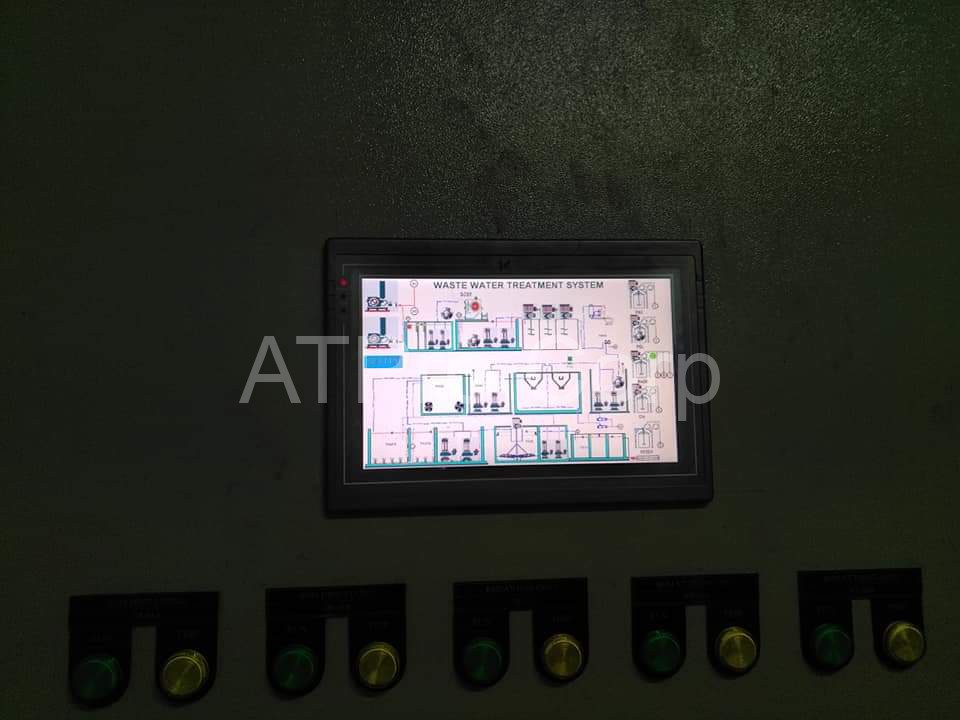
The Human Machine Interface (HMI) is the bridge between operators and the waste water treatment system. ATSCADA provides advanced HMI solutions that are both intuitive and powerful.
Key Features of HMI:
- Real-time system visualization
- Interactive control panels
- Alarm notifications
- Data trend graphs
HMI devices can be connected via Ethernet and installed at monitoring stations, allowing operators to control the system directly from touchscreens or computers.
ATSCADA Monitoring Software Features
The ATSCADA platform offers a comprehensive suite of features tailored for waste water treatment applications.
Real-Time Monitoring
Monitor all system parameters with high accuracy and minimal delay.
Data Storage and Management
Store large volumes of historical data for analysis and compliance.
Trend Analysis
Visualize data trends over time to identify patterns and improve system performance.
Alarm System
Receive instant alerts for abnormal conditions, ensuring quick corrective actions.
Reporting Tools
Generate detailed reports for operational analysis, regulatory compliance, and management review.
Remote Access
Access the system via Winform or Webform interfaces, enabling remote monitoring and control.
Multimedia Integration
Display system data using advanced visualization tools, including charts, graphs, and dashboards.
Benefits of Using ATSCADA for Waste Water Treatment
Implementing ATSCADA in waste water treatment systems provides significant advantages:
- Increased operational efficiency
- Reduced operational costs
- Enhanced system reliability
- Improved environmental compliance
- Scalable and flexible architecture
- User-friendly interface for operators
By integrating all aspects of monitoring, control, and data management into a single platform, ATSCADA ensures optimal performance of waste water treatment facilities.
>> Learn more about SCADA Application in Energy Management System
Conclusion
Waste water treatment is essential for sustainable water management and environmental protection. As treatment plants become more complex, the need for advanced monitoring and control systems continues to grow.
The ATSCADA platform offers a powerful SCADA solution specifically designed for waste water treatment applications. With real-time monitoring, automated control, and comprehensive data management, ATSCADA helps facilities operate more efficiently, reduce costs, and ensure compliance with environmental standards.
If you are looking to upgrade or implement a SCADA system for your waste water treatment plant, ATSCADA provides a reliable, scalable, and future-ready solution.
Contact Us
If you are interested in implementing a waste water treatment SCADA system using the ATSCADA platform, please contact our hotline or visit our website to explore real-world projects and solutions.
ATSCADA - Providing ATSCADA software - The monitoring and data acquisition control system is the appropriate choice for integrated system projects, IoT, smart city projects, agriculture 4.0... Is trusted by many customers.
Related posts
Power SCADA System
Is it promising to apply a Power SCADA system in the power industry? The advantages [...]
Apr
Power Monitoring System Upgrade in Myanmar with ATSCADA
We are proud to announce our new partnership with Logic Master Co., Ltd, our official [...]
Oct
Wood Manufacturing SCADA System for Factory Automation
Wood Factory Digitalization has been a priority for many businesses to implement into their operational [...]
Oct
Warehouse Management System (WMS) – Why Businesses Need Digital Transformation
WAREHOUSE DIGITALIZATION is daily increasing because of the great consumer requirements. Customers expect clarity and transparency [...]
Oct
Vaccine Temperature Monitoring for Storage
The Healthcare Industry Digitalization is one of the most explosive digital revolutions at present. Along with [...]
Oct
Digital Transformation in Assembly Manufacturing for Smart Factories
Recently, digitization in assembly factories in particular and digitization in factories in general has been [...]
Oct