
SCADA Basics
Understanding PLC Siemens in SCADA Systems
Siemens PLC, or PLC in general, may be unfamiliar terms for those outside the automation industry. So, what is a PLC? What role does it play in SCADA Systems?To better understand the foundation of SCADA Systems, you can explore SCADA basics before diving deeper into this topic. Let’s explore this device in more detail through the article below.
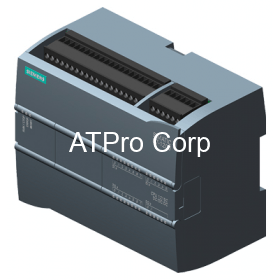
One of the largest technology companies in Europe, Siemens is also a pioneer in automation and industrial software for sectors such as infrastructure, energy, process industries, and manufacturing. In SCADA Systems, Siemens plays a crucial role by providing advanced automation solutions that improve operational efficiency and system reliability.
Additionally, Siemens is one of the world’s leading manufacturers in energy-efficient and resource-saving technologies, contributing significantly to sustainable development across modern SCADA Systems.
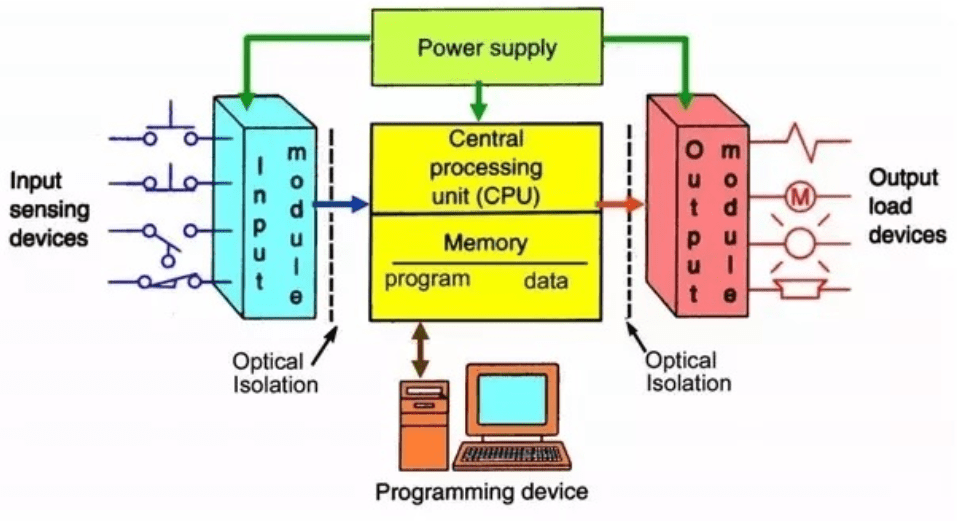
A typical PLC structure includes the following main components in SCADA Systems:
- RAM, ROM – Internal program memory, with the option to expand using external memory such as EPROM.
- CPU (Central Processing Unit) – The core processor with communication ports used to connect with other devices within SCADA Systems.
- Input/Output Modules (I/O Modules) – Responsible for receiving input signals and sending output signals to control field devices in SCADA Systems.
Today, the Industry 4.0 revolution is posing significant challenges for industrial organizations. This is also why automation control systems are rapidly advancing and becoming the foundation of the digital era, especially in modern SCADA Systems closely related to SCADA and IoT integration
- Perform reliably in harsh industrial environments within SCADA Systems.
- Easy to program and learn programming languages.
- Compact design, easy to maintain and repair.
- Large memory capacity to store complex programs in SCADA Systems.
- Capable of communicating with intelligent devices such as computers, networks, and expandable modules in SCADA Systems.
- Lower cost compared to traditional control systems.
Communication Protocols of PLC in SCADA Systems
In modern SCADA Systems, communication protocols play a crucial role in ensuring seamless data exchange between PLCs and supervisory systems,forming an essential part of the overall SCADA software architecture PLCs support various industrial communication protocols such as Modbus, Profibus, Profinet, and Ethernet/IP, which enable reliable and real-time data transmission.
Each protocol in SCADA Systems serves different purposes.For example, industrial systems widely use Modbus due to its simplicity and compatibility, while Profinet enables high-speed communication for real-time industrial automation within SCADA Systems. These protocols allow PLCs to communicate effectively with SCADA software, HMIs, and other field devices.
The adoption of open communication standards in SCADA Systems also improves system scalability and interoperability. This means industrial systems can be easily expanded or upgraded without significant changes to the existing infrastructure.
As industries move toward smart manufacturing, communication protocols in SCADA Systems continue to evolve, supporting IoT integration and cloud-based monitoring solutions.
Benefits of Using Siemens PLC in SCADA Systems
Using Siemens PLCs in SCADA Systems offers numerous advantages for industrial automation. One of the key benefits is high reliability, ensuring stable operation even in harsh industrial environments.
Siemens PLCs are also known for their scalability, allowing businesses to expand their SCADA Systems as production demands grow. With powerful integration capabilities, these PLCs can easily connect with various devices, software platforms, and industrial networks.
Another major advantage is advanced diagnostic and monitoring features. In SCADA Systems, Siemens PLCs provide real-time data analysis, helping operators quickly detect and resolve issues, thereby reducing downtime.
Furthermore, Siemens continuously updates its technology to support Industry 4.0, enabling smarter and more efficient SCADA Systems. This includes integration with IoT, cloud computing, and advanced analytics.
Conclusion
In SCADA Systems, the function of a PLC is similar to that of an RTU (Remote Terminal Unit). A PLC includes user-programmable memory to store instructions for performing specific functions such as I/O control, logic operations, timing, counting, PID control, communication, arithmetic operations, and data/file processing within SCADA Systems.
With the advancement of communication technologies, PLCs in SCADA Systems have evolved from proprietary protocols to open communication standards. This significantly improves system compatibility and makes maintenance and upgrades easier in modern SCADA Systems.
ATSCADA - Providing ATSCADA software - The monitoring and data acquisition control system is the appropriate choice for integrated system projects, IoT, smart city projects, agriculture 4.0... Is trusted by many customers.
Related posts
SCADA and IoT : Modern Industry 4.0
Industry 4.0 is creating a major transformation in the way businesses operate and manufacture. The [...]
Apr
Xu hướng ứng dụng hệ thống scada trong công nghiệp
Các hoạt động sản xuất công nghiệp ngày nay càng cao đòi hỏi nhiều tiêu [...]
Dec
Everything You Need to Know About SCADA Systems
A SCADA Systems is a combination of hardware devices and software that enables remote monitoring [...]
Dec
SCADA Security on Cloud – Securing ATSCADA Cloud Systems
Cloud SCADA, also known as IoT/IIoT-based SCADA, represents a natural evolution of traditional SCADA systems [...]
Nov
SCADA Software Architecture Overview
The SCADA Software architecture is a combination of two main parts: execution software (runtime software) [...]
Jan
SCADA Architecture over the Internet: How Distributed Systems Enable Remote Industrial Monitoring
A SCADA Network plays a critical role in modern industrial automation by enabling real-time monitoring, [...]
Sep