
SCADA Protocols
RS485 to LORA CONVERTER IN SCADA NETWORK
What is RS485 to LoRa Converter?
Are you worried about complex wiring in Modbus RTU RS485 networks? The rs485 to lora converter is the ideal solution to simplify installation and enable long-distance wireless communication in SCADA systems.
Instead of traditional wired RS485 connections, this solution allows you to build a wireless Modbus RTU network quickly and efficiently.
RS485 to LoRa Converter Solution in SCADA Systems
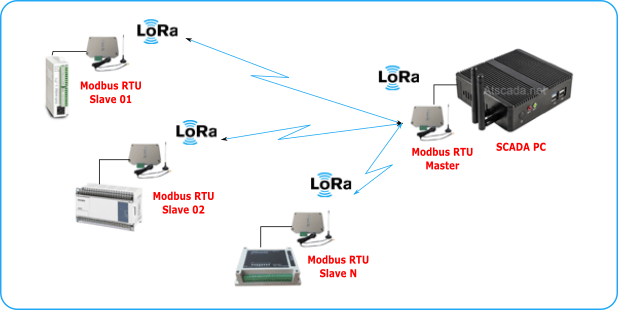
The rs485 to lora converter enables seamless communication between devices in SCADA networks by converting Modbus RTU RS485 signals into LoRa wireless transmission.
This solution is especially useful in industrial environments where wiring is difficult, expensive, or impractical.
With LoRa technology, users can deploy long-distance communication networks while maintaining stable and reliable data transmission.
AT-IO8 IN A LORA NETWORK

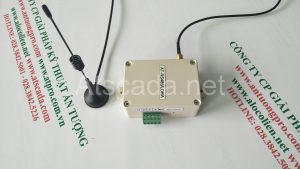
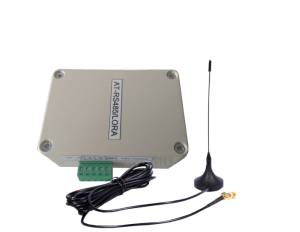
AT-IO8 in a LoRa Network
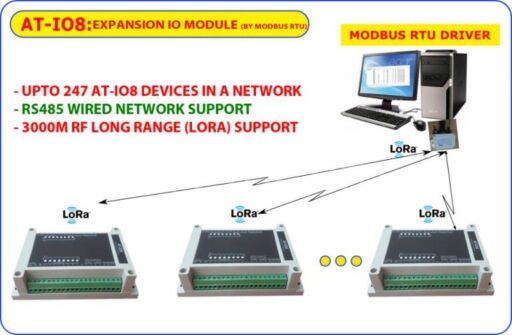
You can use multiple AT-IO8 modules in a LoRa network to create a wireless Modbus RTU system. This system has been tested with communication distances up to 4000 meters in real-world applications.
The rs485 to lora converter allows multiple devices to communicate in a single network without requiring complex wiring infrastructure.
How RS485 to LoRa Converter Works
The working principle of the rs485 to lora converter is simple:
- One converter connects to the Modbus RTU master device such as PLC, HMI, or IPC
- Other converters connect to slave devices
- Data is transmitted wirelessly via LoRa instead of RS485 cables
All devices must support Modbus RTU RS485 and share the same communication configuration (baud rate, data bits, etc.) to ensure proper operation.
This setup enables wireless Modbus networking without changing the existing system architecture.
Key Benefits of RS485 to LoRa Converter
Long-distance communication
Supports communication distances up to 4000 meters, making it ideal for large-scale industrial systems.
Reduced wiring cost
By eliminating RS485 cables, this solution significantly reduces installation time and cost.
Easy deployment
No need for complex wiring or infrastructure—just configure devices and deploy.
Flexible network expansion
You can easily add more devices to the wireless network without modifying existing wiring.
Reliable industrial communication
LoRa technology ensures stable communication even in harsh industrial environments.
Applications of RS485 to LoRa Converter
Used in many SCADA and IoT applications, including:
- Industrial automation systems
- Energy monitoring systems
- Pump stations and water treatment plants
- Agriculture and smart farming
- Remote monitoring systems
This solution is particularly effective in areas where wired communication is difficult or costly.
Conclusion
The rs485 to lora converter is a powerful solution for building wireless Modbus RTU networks in SCADA systems. It eliminates complex wiring, reduces costs, and enables long-distance communication with high reliability.
By using devices like AT-IO8 and RS485/LoRa converters, users can easily deploy scalable and efficient wireless industrial networks.
If you are planning to upgrade your SCADA system or implement IoT solutions, the rs485 to lora converter is a practical and effective choice.
For high-speed real-time industrial networks, you can also explore technologies like theEtherCAT protocol.
ATSCADA - Smart SCADA Software with AI Predictor & Blockchain. ATSCADA is an advanced SCADA software platform for real-time monitoring, intelligent control, and efficient data acquisition. It is ideal for Industrial IoT (IIoT), smart cities, integrated automation systems, and Agriculture 4.0. With a built-in AI Predictor, ATSCADA enables predictive analytics to detect issues early, optimize performance, and reduce downtime. The integration of Blockchain technology ensures secure, transparent, and tamper-proof data management. Highly scalable and easy to integrate, ATSCADA is trusted by businesses to enhance productivity, strengthen cybersecurity, and accelerate digital transformation.

Related articles
MQTT Protocol Explained: What Is MQTT and How It Works
Choosing the right connectivity protocol is a crucial step in building an IoT system, and [...]
Mar
EtherCAT Protocol Explained: How EtherCAT Works in Industrial Automation
What is the ethercat protocol? How does the EtherCAT (Ethernet for Control Automation Technology) industrial [...]
Jan
MQTT Gateway Selection Guide: How to Choose the Right MQTT Gateway
The mqtt gateway market in Industry 4.0 is highly diverse, offering various types to meet [...]
Nov
Modbus Power Meter Integration with ATDriver Server
In industrial energy monitoring systems, accurate data acquisition from power meters is essential for optimizing [...]
Oct
KepServer OPC Connection with Delta PLC via Modbus ASCII
In industrial automation systems, seamless communication between PLC devices and SCADA software is essential for [...]
Oct
Modbus TCP/IP Connection with S7-1200 PLC Using ATDriver Server
In modern industrial automation systems, seamless and reliable communication between SCADA platforms and PLCs is [...]
Oct