
Technical Guides
Cost of a SCADA System: Complete Pricing Guide
Understanding the Cost of a SCADA System is essential for businesses planning to implement or upgrade industrial automation. SCADA (Supervisory Control and Data Acquisition) systems play a critical role in monitoring, controlling, and optimizing industrial processes—but their pricing can vary significantly depending on multiple factors.
From small-scale deployments to enterprise-level infrastructures, the cost structure is influenced by software licensing, hardware requirements, system complexity, and long-term maintenance. In this guide, we break down all cost components and explain how solutions like ATSCADA can help you achieve maximum value with optimized investment.
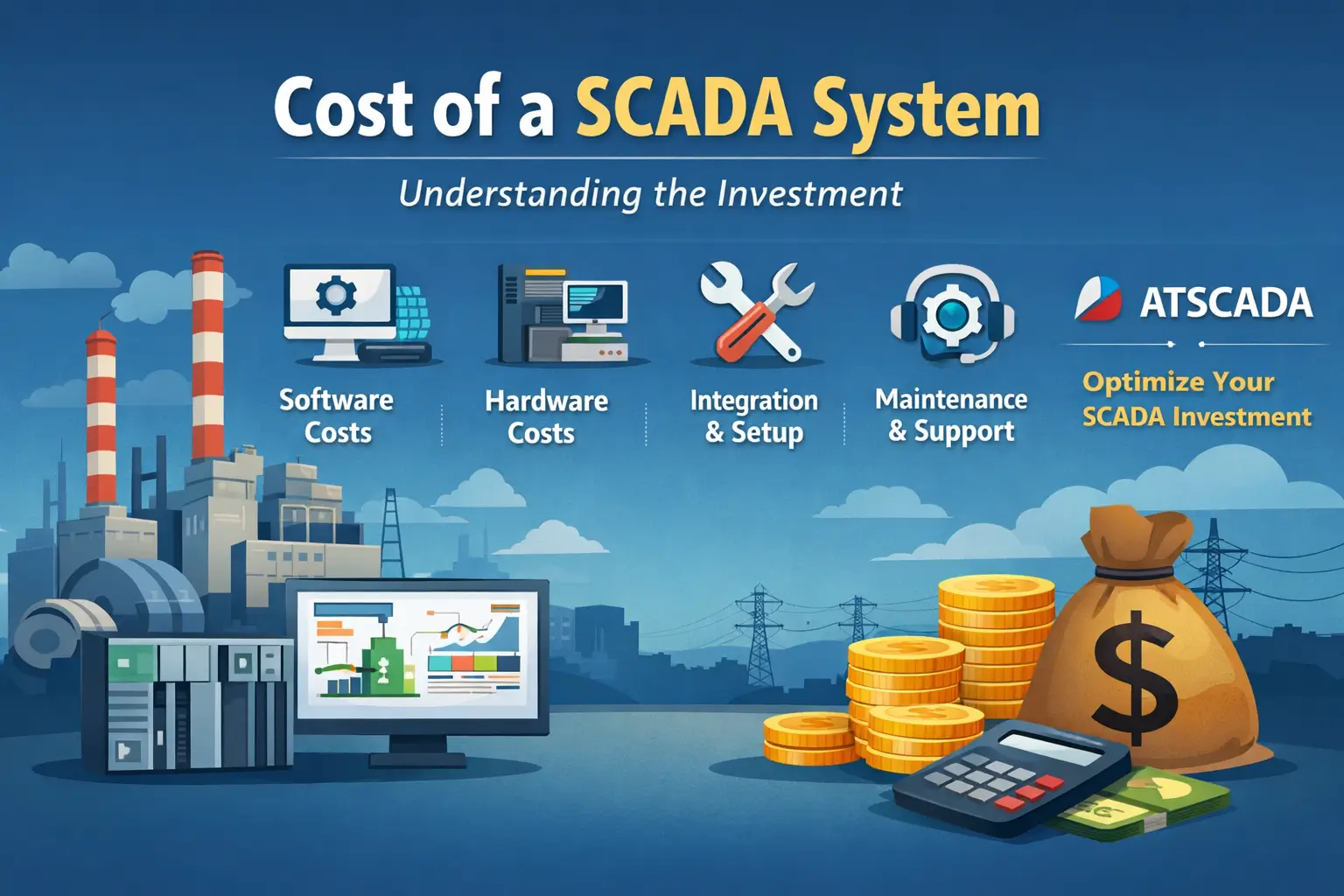
What Determines the Cost of a SCADA System?
System Size and Complexity
The most significant factor affecting the cost of a SCADA system is its scale. A simple SCADA setup for a small facility will cost far less than a multi-site industrial deployment.
Key variables include:
- Number of PLCs (Programmable Logic Controllers)
- Number of data points (tags)
- Geographic distribution
- Integration with existing systems
Larger systems require more powerful servers, additional licenses, and advanced configurations, all of which increase costs.
SCADA Software Licensing
SCADA software is typically priced based on various factors, as explained in SCADA software price complete cost.
- Tag count (number of monitored variables)
- Number of clients or users
- Features and modules included
There are generally two pricing models:
Perpetual License
- One-time payment
- Higher upfront cost
- Optional annual support fees
Subscription-Based License
- Lower initial cost
- Monthly or yearly payments
- Includes updates and support
Modern platforms like ATSCADA often provide flexible pricing models to suit different business needs.
Hardware Costs
Hardware is another major contributor to the overall cost.
Typical components include:
- SCADA servers
- Operator workstations
- Networking equipment
- Industrial PCs
- Data acquisition devices
For cloud-based SCADA systems, hardware costs can be reduced significantly since infrastructure is hosted remotely.
Development and Integration
Customization and integration can add substantial costs to a SCADA project.
This includes:
- System design and engineering
- HMI (Human-Machine Interface) development
- Integration with ERP, MES, or IoT platforms
- Database configuration
The more tailored the system, the higher the development cost. However, platforms like ATSCADA help reduce these costs through pre-built modules and scalable architecture.
Installation and Commissioning
Deployment costs include:
- On-site installation
- System testing
- Commissioning
- Staff training
These costs depend on project complexity and location. Remote deployment options can help reduce expenses.
Maintenance and Support
Ongoing costs are often overlooked but are crucial for long-term operation.
Typical recurring costs:
- Software updates
- Technical support
- System upgrades
- Cybersecurity maintenance
Choosing a SCADA provider with reliable support—like ATSCADA—can minimize downtime and operational risks.
Hidden Costs to Consider
Many businesses underestimate the hidden costs of SCADA systems. These include:
1. Scalability Limitations
Some systems require costly upgrades when expanding.
2. Vendor Lock-in
Proprietary systems may limit flexibility and increase long-term costs.
3. Training Costs
Operators and engineers need proper training to use the system effectively.
4. Downtime Risks
Poor system design can lead to expensive operational disruptions.
How ATSCADA Reduces SCADA Costs
ATSCADA is designed to deliver powerful SCADA capabilities while minimizing costs across all stages.
Flexible Licensing
ATSCADA offers adaptable pricing models that suit both small businesses and large enterprises, helping reduce upfront investment.
Scalable Architecture
With ATSCADA, you can start small and expand without major system overhauls, avoiding unnecessary future costs.
Reduced Development Time
Pre-configured modules and intuitive tools allow faster deployment, significantly lowering engineering expenses.
Cloud-Ready Deployment
ATSCADA supports cloud-based SCADA, reducing hardware costs and improving accessibility.
Long-Term Value
With strong support, continuous updates, and high reliability, ATSCADA ensures a lower total cost of ownership (TCO).
Cost Optimization Tips
To get the best value from your SCADA investment:
1. Define Clear Requirements
Avoid overpaying for features you don’t need.
2. Choose Scalable Solutions
Ensure the system can grow with your business.
3. Consider Cloud-Based SCADA
Reduce infrastructure and maintenance costs.
4. Compare Vendors Carefully
Look beyond upfront cost—focus on long-term value, especially when evaluating cheap SCADA software options.
5. Leverage Modular Platforms
Platforms like ATSCADA help minimize development and upgrade expenses.
Conclusion
The Cost of a SCADA System depends on multiple factors, including system size, software licensing, hardware, and ongoing maintenance. While initial costs can seem high, a well-designed SCADA system delivers significant long-term benefits in efficiency, automation, and data-driven decision-making.
Choosing the right platform is critical. With its flexible pricing, scalable architecture, and cost-efficient deployment, ATSCADA stands out as a smart choice for businesses looking to optimize their SCADA investment without compromising performance.
By understanding all cost components and planning strategically, you can build a SCADA system that delivers maximum ROI while staying within budget.
👉 Learn More about industrial automation
ATSCADA - Smart SCADA Software with AI Predictor & Blockchain. ATSCADA is an advanced SCADA software platform for real-time monitoring, intelligent control, and efficient data acquisition. It is ideal for Industrial IoT (IIoT), smart cities, integrated automation systems, and Agriculture 4.0. With a built-in AI Predictor, ATSCADA enables predictive analytics to detect issues early, optimize performance, and reduce downtime. The integration of Blockchain technology ensures secure, transparent, and tamper-proof data management. Highly scalable and easy to integrate, ATSCADA is trusted by businesses to enhance productivity, strengthen cybersecurity, and accelerate digital transformation.
Related articles
Utility SCADA Systems for Power, Water, and Infrastructure Management
In today’s rapidly evolving industrial landscape, Utility SCADA Systems play a critical role in managing [...]
Apr
SCADA Software Price: Complete Cost Guide for Industrial Systems
Understanding SCADA software price is essential for any organization planning to implement or upgrade industrial [...]
Apr
Cheap SCADA Software for Small and Medium Businesses
In today’s competitive industrial landscape, small and medium businesses (SMBs) are under constant pressure to [...]
Apr
Low Cost SCADA Solutions for Efficient Industrial Automation
In today’s competitive industrial landscape, companies are under constant pressure to improve efficiency while minimizing [...]
Apr
Ignition SCADA and AI: Integrating Intelligent Automation into Modern SCADA Systems
In modern industrial environments, Ignition SCADA and AI are increasingly combined to move beyond traditional [...]
Apr
AI Based SCADA: Enhancing Data-Driven Industrial Control Systems
Modern industries are no longer satisfied with systems that simply monitor operations—they demand systems that [...]
Apr