
Technical Guides
Open SCADA System: Designing Flexible and Scalable Industrial Control
Industrial automation is no longer just about control—it’s about connectivity, intelligence, and adaptability. The open scada system concept has emerged as a key solution for organizations looking to modernize operations without being constrained by rigid, proprietary platforms.
Unlike traditional systems, an open SCADA system allows businesses to integrate multiple technologies, scale easily, and respond quickly to operational changes. ATSCADA is built around this philosophy, offering a flexible and future-ready SCADA platform.
What Defines an Open SCADA System Today?
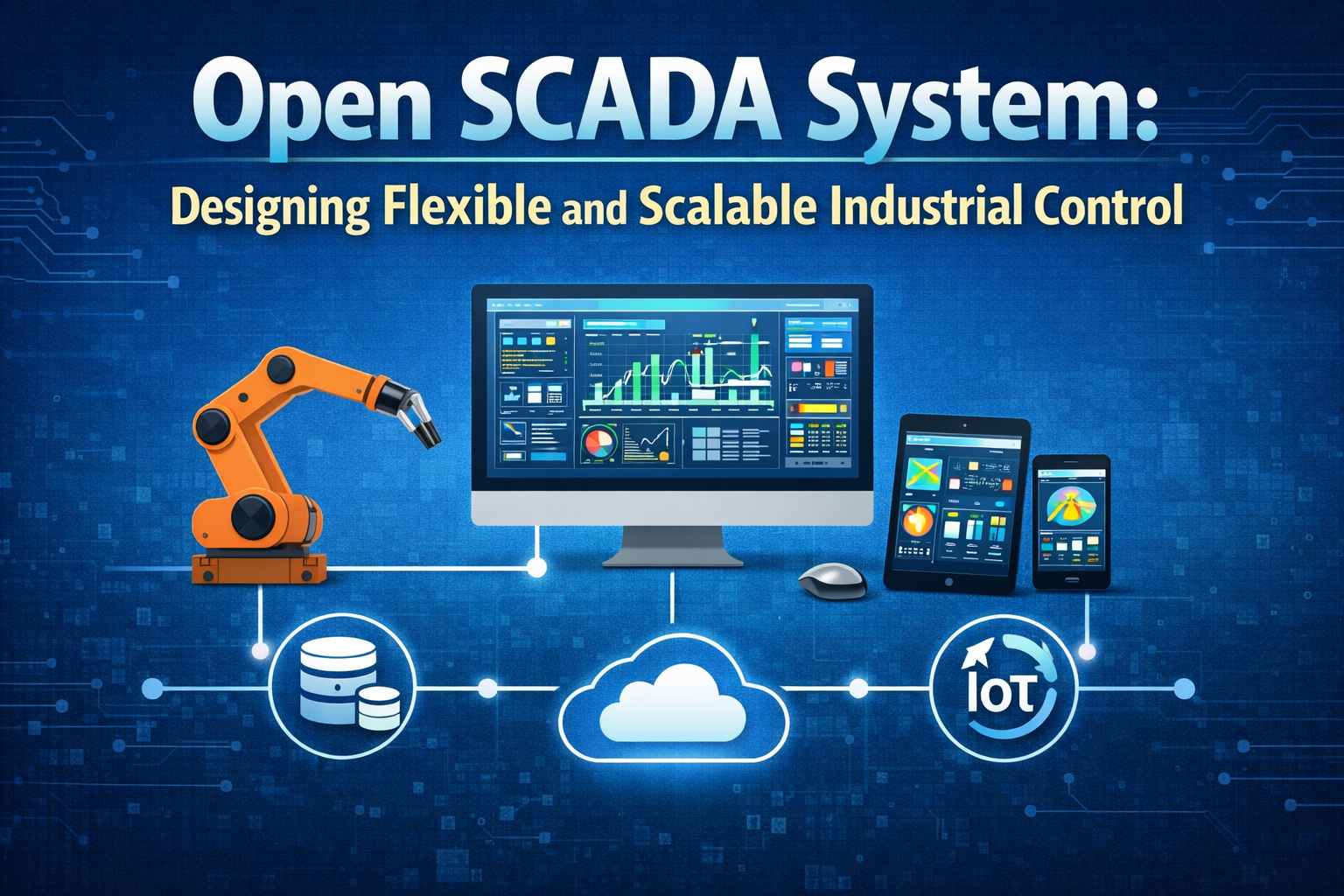
An open scada system is not simply a SCADA platform with basic monitoring capabilities. It represents a broader architecture designed for interoperability and long-term scalability.
Core Elements of an Open SCADA System
- Multi-protocol communication (OPC UA, Modbus, MQTT)
- Vendor-neutral integration
- Flexible deployment (on-premise or cloud)
- Extensible architecture for future upgrades
These elements allow industries to move beyond isolated systems toward fully connected automation environments.
Why Businesses Are Moving Toward Open SCADA Systems
Breaking the Limits of Traditional SCADA
Traditional SCADA systems often create barriers such as limited integration, high upgrade costs, and dependency on a single vendor.
In contrast, an open SCADA system provides:
- Greater flexibility in system design
- Easier integration with existing infrastructure
- Lower long-term operational costs
- Faster adoption of new technologies
Supporting Digital Transformation
As industries adopt Industrial IoT (IIoT), cloud computing, and AI analytics, open SCADA systems become essential for handling complex data flows and system interactions.
ATSCADA: A Modern Open SCADA System Platform
ATSCADA is designed to fully leverage the benefits of an open scada system, offering a comprehensive solution for industrial automation.
A Platform Built for Openness
ATSCADA supports multiple communication standards, ensuring seamless connectivity across devices and systems.
Real-Time Operational Visibility
With advanced dashboards, operators can monitor processes in real time and make informed decisions quickly.
Web-Based Accessibility
Unlike traditional systems and standalone open SCADA Windows solutions , ATSCADA allows access through web browsers, enabling remote monitoring and control.
Cloud and Edge Integration
The platform supports both cloud and edge computing, providing flexibility in data processing and system deployment.
Key Capabilities That Make an Open SCADA System Effective
Instead of listing generic features, it’s more useful to understand how these capabilities impact real operations.
Continuous Data Flow
An open SCADA system ensures uninterrupted communication between field devices, controllers, and central systems.
Intelligent Alerts and Notifications
Operators receive real-time alerts when anomalies occur, helping prevent failures and reduce downtime.
Data-Driven Insights
Historical data analysis allows businesses to identify trends, optimize performance, and predict maintenance needs.
Remote System Control
Web-based access enables operators to manage systems from any location.
Integration with PLC Systems
A reliable open scada system must integrate seamlessly with PLCs to ensure accurate control and data exchange.
ATSCADA simplifies PLC integration by supporting multiple brands and communication protocols, reducing complexity in system deployment.
Implementation Approach: Building an Open SCADA System
Designing an open SCADA system requires a structured approach.
Step 1: Define Operational Requirements
Identify key objectives such as monitoring, control, and data analysis.
Step 2: Select an Open Platform
Choose a solution like ATSCADA or a practical download open SCADA option that supports open standards and scalability.
Step 3: Design System Architecture
Ensure compatibility between devices, communication protocols, and software platforms.
Step 4: Deploy and Test
Implement the system in phases and test performance before full-scale deployment.
Step 5: Optimize and Expand
Continuously improve system performance and plan for future growth.
Real Operational Advantages of Open SCADA Systems
Instead of focusing on industries, let’s look at the actual value delivered in operations.
Faster Decision-Making
Real-time data enables quick responses to operational changes.
Reduced Downtime
Early detection of issues helps prevent system failures.
Improved Efficiency
Automation and data insights optimize resource usage.
Long-Term Scalability
Systems can expand without major redesign or replacement.
Challenges and How ATSCADA Solves Them
Complexity in Integration
Many systems struggle with connecting multiple devices.
Solution: ATSCADA supports open protocols and simplifies integration.
Data Overload
Large volumes of data can be difficult to manage.
Solution: ATSCADA provides structured dashboards and analytics tools.
Security Concerns
Open systems can be vulnerable without proper protection.
Solution: ATSCADA includes security features such as access control and secure communication.
The Future of Open SCADA Systems
The evolution of the open scada system is closely linked to emerging technologies:
- Industrial IoT (IIoT) for enhanced connectivity
- Artificial Intelligence for predictive analytics
- Cloud SCADA for remote scalability
- Edge computing for faster processing
ATSCADA continues to evolve with these trends, ensuring long-term value for industrial operations.
Conclusion
An open scada system is no longer just an alternative—it is becoming the standard for modern industrial automation. Its ability to integrate, scale, and adapt makes it essential for businesses aiming to stay competitive.
With ATSCADA, organizations gain access to a powerful and flexible SCADA platform that supports real-time monitoring, seamless integration, and future-ready technologies.
If your goal is to build a smarter and more connected industrial system, adopting an open SCADA system with ATSCADA is the right step forward.

ATSCADA - Smart SCADA Software with AI Predictor & Blockchain. ATSCADA is an advanced SCADA software platform for real-time monitoring, intelligent control, and efficient data acquisition. It is ideal for Industrial IoT (IIoT), smart cities, integrated automation systems, and Agriculture 4.0. With a built-in AI Predictor, ATSCADA enables predictive analytics to detect issues early, optimize performance, and reduce downtime. The integration of Blockchain technology ensures secure, transparent, and tamper-proof data management. Highly scalable and easy to integrate, ATSCADA is trusted by businesses to enhance productivity, strengthen cybersecurity, and accelerate digital transformation.
Related articles
Utility SCADA Systems for Power, Water, and Infrastructure Management
In today’s rapidly evolving industrial landscape, Utility SCADA Systems play a critical role in managing [...]
Apr
Cost of a SCADA System: Complete Pricing Guide
Understanding the Cost of a SCADA System is essential for businesses planning to implement or [...]
Apr
SCADA Software Price: Complete Cost Guide for Industrial Systems
Understanding SCADA software price is essential for any organization planning to implement or upgrade industrial [...]
Apr
Cheap SCADA Software for Small and Medium Businesses
In today’s competitive industrial landscape, small and medium businesses (SMBs) are under constant pressure to [...]
Apr
Low Cost SCADA Solutions for Efficient Industrial Automation
In today’s competitive industrial landscape, companies are under constant pressure to improve efficiency while minimizing [...]
Apr
Ignition SCADA and AI: Integrating Intelligent Automation into Modern SCADA Systems
In modern industrial environments, Ignition SCADA and AI are increasingly combined to move beyond traditional [...]
Apr