
Technical Guides
Application for SCADA: Building Smart and Scalable Monitoring Systems
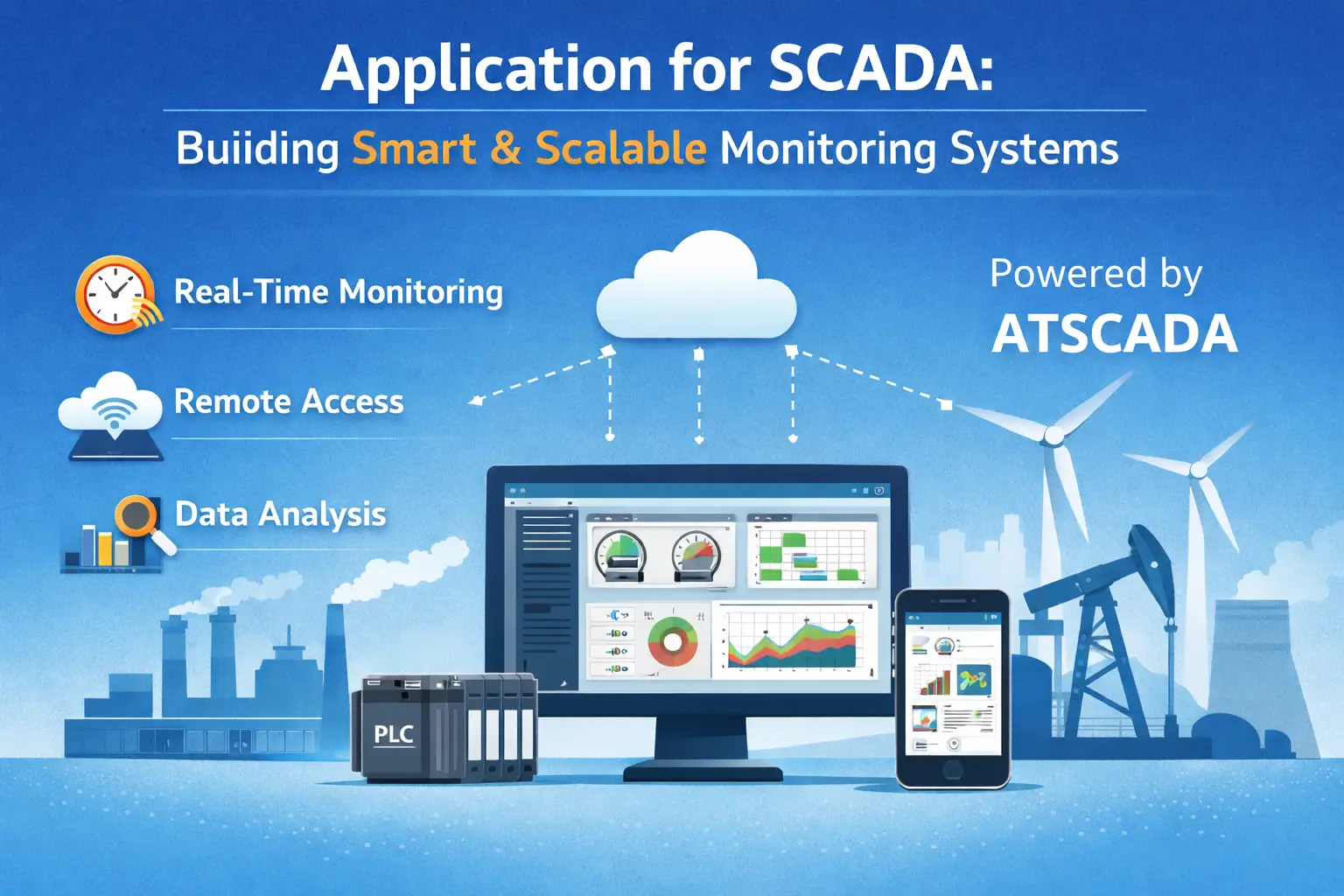
In today’s rapidly evolving industrial landscape, the demand for efficient monitoring and control systems is higher than ever. The application for SCADA (Supervisory Control and Data Acquisition) has become a cornerstone of modern automation, enabling industries to achieve real-time visibility, improved productivity, and enhanced decision-making.
From manufacturing plants to energy grids, SCADA systems are transforming how organizations manage operations. More importantly, advanced platforms like ATSCADA are redefining scalability, flexibility, and web-based control—making SCADA more accessible and powerful than traditional solutions.
What Is an Application for SCADA?
An application for SCADA refers to the implementation of software and hardware systems designed to:
- Collect real-time data from sensors and devices
- Monitor industrial processes remotely
- Control equipment through automated commands
- Analyze data for optimization and predictive maintenance
These applications are widely used in industries such as:
- Energy and utilities
- Oil and gas
- Manufacturing
- Water treatment
- Smart infrastructure
Unlike traditional monitoring systems, modern SCADA applications provide web-based access, allowing operators to manage systems anytime, anywhere.
Core Components of a SCADA Application
To fully understand the application for SCADA, it’s important to break down its main components:
1. Human-Machine Interface (HMI)
The HMI provides a visual interface for operators to interact with the system. It displays real-time data, alarms, and system status. Modern SCADA HMI applications improve visualization, usability, and faster operator response in industrial environments.
2. Remote Terminal Units (RTUs) and PLCs
These devices collect data from sensors and execute control commands in the field.
3. Communication Infrastructure
SCADA systems rely on communication protocols (e.g., Modbus, OPC UA) to transmit data between devices and servers.
4. SCADA Software Platform
This is the brain of the system, where data is processed, visualized, and stored.
Key Benefits of Using SCADA Applications
Real-Time Monitoring
SCADA systems provide instant visibility into operations, helping teams respond quickly to issues.
Improved Efficiency
Automation reduces manual intervention, leading to faster and more accurate processes.
Data-Driven Decision Making
Historical and real-time data allow businesses to optimize performance and predict failures.
Remote Accessibility
Modern SCADA applications, especially web-based ones like ATSCADA, enable remote monitoring via browsers and mobile devices.
Scalability
Organizations can expand their systems without significant infrastructure changes.
How ATSCADA Enhances SCADA Applications
While many SCADA platforms exist, ATSCADA stands out by offering a modern, web-based approach tailored for Industry 4.0.
1. Web-Based Architecture
ATSCADA eliminates the need for complex installations. Users can access the system directly through a web browser, making deployment faster and more flexible.
2. High Scalability
Whether managing a small factory or a large industrial network, ATSCADA scales effortlessly to meet growing demands.
3. Advanced Visualization
With intuitive dashboards and customizable HMIs, users can monitor systems with clarity and precision.
4. Integration Capabilities
ATSCADA supports multiple protocols and integrates seamlessly with existing industrial systems.
Use Cases of SCADA Applications
1. Manufacturing Automation
SCADA applications help monitor production lines, detect faults, and improve overall efficiency.
2. Energy Management
Power plants and renewable energy systems rely on SCADA for grid monitoring and load balancing.
3. Water and Wastewater Treatment
Operators use SCADA to control pumps, monitor water quality, and ensure regulatory compliance.
4. Oil and Gas Industry
SCADA systems track pipelines, manage pressure levels, and detect leaks in real time.
Designing a Scalable SCADA Application
Building an effective application for SCADA requires careful planning and the right technology stack.
Choose the Right Platform
Opt for a flexible and web-based solution like ATSCADA to ensure long-term scalability.
Focus on Data Architecture
Efficient data collection and storage are critical for performance and analytics.
Ensure Cybersecurity
Implement strong security measures to protect sensitive industrial data.
Enable Remote Access
Modern SCADA applications should support cloud or web-based access for better flexibility.
Future Trends in SCADA Applications
The future of SCADA is closely tied to digital transformation and Industry 4.0.
Integration with IoT
SCADA systems are increasingly connected with IoT devices for enhanced data collection.
Cloud-Based SCADA
Cloud deployment reduces infrastructure costs and improves scalability.
AI and Predictive Analytics
Artificial intelligence enables predictive maintenance and smarter decision-making.
Mobile SCADA
Operators can monitor systems directly from smartphones and tablets.
ATSCADA is already aligning with these trends, making it a future-ready solution for modern industries.
Why Businesses Should Invest in SCADA Applications
Investing in an application for SCADA is no longer optional—it’s essential for staying competitive. Companies that adopt advanced SCADA systems benefit from:
- Reduced downtime
- Lower operational costs
- Improved safety
- Better compliance with industry standards
With platforms like ATSCADA, businesses can implement SCADA solutions faster and more efficiently than ever before.
Conclusion
The application for SCADA plays a critical role in building smart, efficient, and scalable industrial systems. As industries continue to evolve, the need for real-time monitoring, automation, and data-driven insights will only grow.
By leveraging modern platforms like ATSCADA, organizations can unlock the full potential of SCADA technology—ensuring flexibility, scalability, and future readiness.
If you’re looking to modernize your operations, investing in a robust SCADA application is a strategic move that delivers long-term value.
👉 Learn More about industrial automation system
ATSCADA - Smart SCADA Software with AI Predictor & Blockchain. ATSCADA is an advanced SCADA software platform for real-time monitoring, intelligent control, and efficient data acquisition. It is ideal for Industrial IoT (IIoT), smart cities, integrated automation systems, and Agriculture 4.0. With a built-in AI Predictor, ATSCADA enables predictive analytics to detect issues early, optimize performance, and reduce downtime. The integration of Blockchain technology ensures secure, transparent, and tamper-proof data management. Highly scalable and easy to integrate, ATSCADA is trusted by businesses to enhance productivity, strengthen cybersecurity, and accelerate digital transformation.
Related articles
Utility SCADA Systems for Power, Water, and Infrastructure Management
In today’s rapidly evolving industrial landscape, Utility SCADA Systems play a critical role in managing [...]
Apr
Cost of a SCADA System: Complete Pricing Guide
Understanding the Cost of a SCADA System is essential for businesses planning to implement or [...]
Apr
SCADA Software Price: Complete Cost Guide for Industrial Systems
Understanding SCADA software price is essential for any organization planning to implement or upgrade industrial [...]
Apr
Cheap SCADA Software for Small and Medium Businesses
In today’s competitive industrial landscape, small and medium businesses (SMBs) are under constant pressure to [...]
Apr
Low Cost SCADA Solutions for Efficient Industrial Automation
In today’s competitive industrial landscape, companies are under constant pressure to improve efficiency while minimizing [...]
Apr
Ignition SCADA and AI: Integrating Intelligent Automation into Modern SCADA Systems
In modern industrial environments, Ignition SCADA and AI are increasingly combined to move beyond traditional [...]
Apr