
Technical Guides
Utility SCADA Systems for Power, Water, and Infrastructure Management
In today’s rapidly evolving industrial landscape, Utility SCADA Systems play a critical role in managing essential services such as electricity, water, and infrastructure networks. These systems enable operators to monitor, control, and optimize complex processes in real time, ensuring reliability, efficiency, and safety.
For organizations looking to modernize their operations, partnering with solutions like ATSCADA can provide scalable and cost-effective SCADA implementations tailored to utility environments.
What Are Utility SCADA Systems?
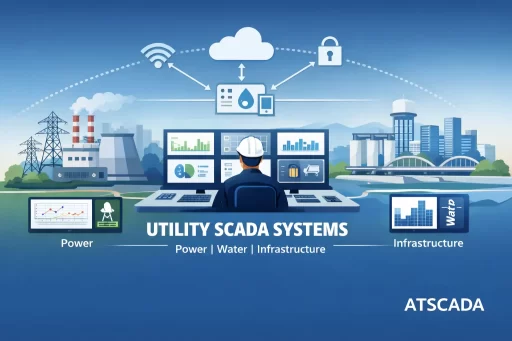
Utility SCADA Systems (Supervisory Control and Data Acquisition) are centralized platforms used to supervise and control distributed assets across utility networks. These include:
- Power generation and distribution systems
- Water treatment and distribution networks
- Gas pipelines and infrastructure systems
At their core, these systems collect real-time data from remote devices such as PLCs and RTUs, process the data, and present it through intuitive dashboards for operators.
Why Utility SCADA Systems Are Essential
Real-Time Monitoring and Control
Utility SCADA Systems allow operators to monitor system performance continuously. Whether it’s voltage levels in a power grid or water pressure in pipelines, real-time visibility ensures rapid response to anomalies.
Improved Operational Efficiency
Automation reduces manual intervention and minimizes human error. This leads to optimized workflows and reduced downtime.
Enhanced Reliability and Safety
By detecting faults early and enabling predictive maintenance, SCADA systems help prevent catastrophic failures in critical infrastructure.
Key Components of Utility SCADA Systems
1. Remote Terminal Units (RTUs) and PLCs
These devices collect data from sensors and execute control commands in the field.
2. Communication Infrastructure
Reliable communication networks (wired or wireless) transmit data between field devices and control centers.
3. SCADA Software Platform
This is the core interface where data is visualized and analyzed. Modern platforms offer advanced analytics, alarms, and reporting tools.
4. Human-Machine Interface (HMI)
Operators interact with the system through HMIs, which provide graphical representations of processes.
Applications of Utility SCADA Systems
Power Utilities
Utility SCADA Systems are widely used in electricity generation, transmission, and distribution. They help manage load balancing, fault detection, and energy efficiency.
Water and Wastewater Management
SCADA enables real-time monitoring of water levels, flow rates, and treatment processes, ensuring consistent supply and regulatory compliance.
Infrastructure and Smart Cities
From traffic management to public lighting, SCADA systems are integral to modern smart city initiatives.
Benefits of Implementing Utility SCADA Systems
Scalability
Modern SCADA solutions can scale with growing infrastructure needs, making them suitable for both small utilities and large enterprises.
Cost Optimization
By reducing downtime and improving efficiency, organizations can significantly lower operational costs, including overall SCADA software price considerations.
Data-Driven Decision Making
Advanced analytics and historical data allow operators to make informed decisions and improve long-term planning.
Utility SCADA Systems and ATSCADA
Tailored Solutions for Utilities
ATSCADA provides customized SCADA solutions designed specifically for utility applications. Their systems are built to handle large-scale deployments while maintaining flexibility and ease of use.
Integration with Modern Technologies
ATSCADA integrates SCADA systems with:
- IoT devices
- Cloud platforms
- AI-based analytics
This ensures future-ready infrastructure capable of predictive maintenance and intelligent automation.
User-Friendly Interface
With intuitive dashboards and visualization tools, ATSCADA makes it easier for operators to manage complex systems efficiently.

Challenges in Utility SCADA Implementation
Cybersecurity Risks
As SCADA systems become more connected, they are increasingly vulnerable to cyber threats. Implementing robust security measures is essential.
Integration with Legacy Systems
Many utilities still rely on outdated infrastructure, making integration a challenge. Modern SCADA platforms must support hybrid environments.
Initial Investment Costs
While SCADA systems deliver long-term savings, the upfront cost can be significant, as outlined in the cost of a SCADA system.
Best Practices for Deploying Utility SCADA Systems
Conduct a Needs Assessment
Understand your operational requirements and define clear objectives before implementation.
Choose a Scalable Platform
Select a system that can grow with your infrastructure and adapt to future technologies.
Focus on Security
Implement multi-layered cybersecurity strategies, including encryption, firewalls, and access control.
Train Your Workforce
Ensure operators and engineers are well-trained to maximize system efficiency.
Future Trends in Utility SCADA Systems
AI and Predictive Analytics
AI-powered SCADA systems can predict failures before they occur, reducing downtime and maintenance costs.
Cloud-Based SCADA
Cloud integration allows remote access, scalability, and reduced infrastructure costs.
Smart Grid and Smart Water Systems
Utility SCADA Systems are becoming the backbone of smart infrastructure, enabling real-time optimization and sustainability.
Conclusion
Utility SCADA Systems are essential for managing modern power, water, and infrastructure networks. They provide real-time monitoring, improve efficiency, and enhance system reliability.
By leveraging advanced solutions from ATSCADA, organizations can implement scalable, secure, and future-ready SCADA systems tailored to their specific needs.
As utilities continue to evolve, investing in robust SCADA systems is no longer optional—it is a strategic necessity for sustainable and efficient operations.
👉 Learn More about SCADA SYSTEMS
ATSCADA - Smart SCADA Software with AI Predictor & Blockchain. ATSCADA is an advanced SCADA software platform for real-time monitoring, intelligent control, and efficient data acquisition. It is ideal for Industrial IoT (IIoT), smart cities, integrated automation systems, and Agriculture 4.0. With a built-in AI Predictor, ATSCADA enables predictive analytics to detect issues early, optimize performance, and reduce downtime. The integration of Blockchain technology ensures secure, transparent, and tamper-proof data management. Highly scalable and easy to integrate, ATSCADA is trusted by businesses to enhance productivity, strengthen cybersecurity, and accelerate digital transformation.
Related articles
Cost of a SCADA System: Complete Pricing Guide
Understanding the Cost of a SCADA System is essential for businesses planning to implement or [...]
Apr
SCADA Software Price: Complete Cost Guide for Industrial Systems
Understanding SCADA software price is essential for any organization planning to implement or upgrade industrial [...]
Apr
Cheap SCADA Software for Small and Medium Businesses
In today’s competitive industrial landscape, small and medium businesses (SMBs) are under constant pressure to [...]
Apr
Low Cost SCADA Solutions for Efficient Industrial Automation
In today’s competitive industrial landscape, companies are under constant pressure to improve efficiency while minimizing [...]
Apr
Ignition SCADA and AI: Integrating Intelligent Automation into Modern SCADA Systems
In modern industrial environments, Ignition SCADA and AI are increasingly combined to move beyond traditional [...]
Apr
AI Based SCADA: Enhancing Data-Driven Industrial Control Systems
Modern industries are no longer satisfied with systems that simply monitor operations—they demand systems that [...]
Apr