
Technical Guides
SCADA Reporting Software: Unlocking the Full Value of Industrial Data
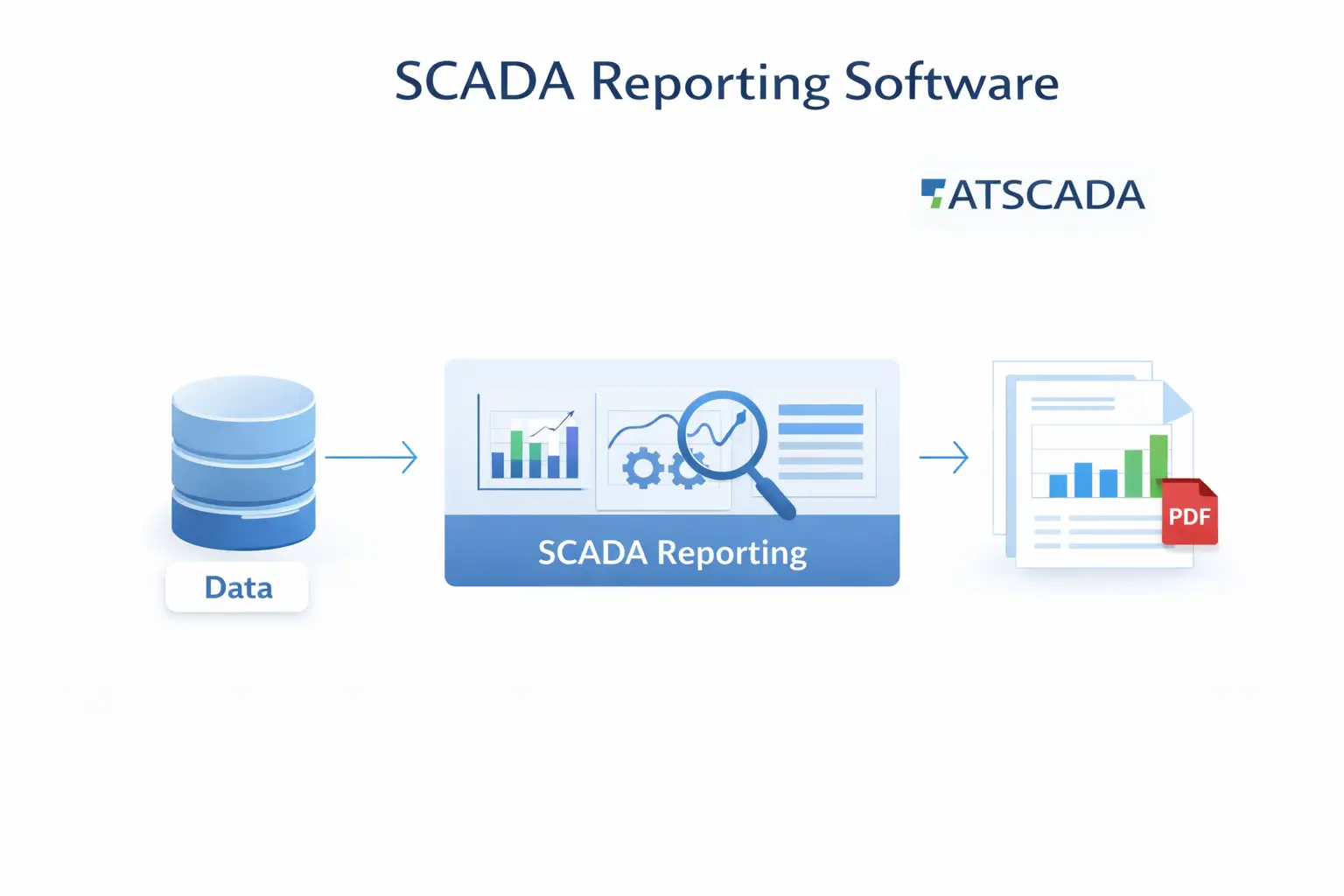
Industrial systems generate massive amounts of data every second—but without the right tools, that data often goes unused. This is where scada reporting software becomes essential. Instead of simply displaying real-time values, it enables organizations to structure, analyze, and act on historical and operational data.
Today, reporting is no longer a secondary feature of SCADA systems. It is a core capability that drives efficiency, compliance, and continuous improvement. With platforms like ATSCADA, businesses can move beyond basic monitoring and gain deeper visibility into their operations.
This article explores how SCADA reporting software works, why it matters, and how ATSCADA delivers advanced reporting capabilities for modern industrial environments.
Understanding SCADA Reporting Software
At its core, scada reporting software is designed to convert raw process data into meaningful reports. These reports can be visual, tabular, or analytical, depending on operational needs.
Unlike simple dashboards, reporting tools focus on:
- Historical data analysis
- Structured documentation
- Performance tracking over time
Operational Reports
Provide daily or shift-based insights into system performance.
Analytical Reports
Focus on trends, comparisons, and efficiency metrics.
Alarm and Event Reports
Capture system anomalies, helping teams diagnose issues faster.
Compliance Reports
Ensure that operations meet regulatory and industry standards.
Why SCADA Reporting Software Is Critical
Turning Data into Decisions
Without reporting, data remains fragmented. SCADA reporting software consolidates information into clear insights that support decision-making.
Improving Process Efficiency
By analyzing trends, businesses can identify inefficiencies and optimize operations.
Enhancing Accountability
Reports provide documented evidence of system performance, which is essential for audits and internal reviews.
Supporting Long-Term Planning
Historical data allows organizations to forecast performance and plan maintenance proactively.
Key Capabilities of Modern SCADA Reporting Software
To deliver real value, a reporting solution must go beyond basic data export.
Automated Report Scheduling
Reports can be generated automatically at defined intervals, reducing manual work.
Custom Report Design
Users can configure reports based on specific KPIs, processes, or departments using structured SCADA software programming approaches
Multi-Format Export
Reports are typically available in formats such as:
- Excel
- CSV
Data Visualization Tools
Charts, graphs, and dashboards improve readability and interpretation.
ATSCADA: A Smarter Approach to SCADA Reporting
ATSCADA takes scada reporting software to the next level by integrating reporting directly into a flexible and scalable platform.
Unified Data Environment
ATSCADA collects and standardizes data from multiple sources, ensuring consistency across reports.
Real-Time and Historical Integration
Users can combine live data with historical records for deeper insights.
Web-Based Reporting Access
Reports can be accessed anytime through a web browser, enabling remote monitoring and collaboration.
Scalable Reporting Infrastructure
As data grows, ATSCADA maintains performance without compromising speed or accuracy.
Integration with PLC and Industrial Systems
A powerful reporting system depends on reliable data sources. That’s why integration with PLCs is critical.
ATSCADA supports multiple communication protocols and PLC SCADA software download solutions , ensuring accurate data collection for reporting.
Practical Use Cases of SCADA Reporting Software
SCADA reporting software is widely used across industries, each with unique requirements.
Manufacturing
Track production efficiency, downtime, and machine performance.
Energy Management
Monitor consumption patterns and optimize energy usage.
Water and Wastewater
Analyze system performance and ensure compliance with regulations.
Oil and Gas
Generate detailed operational reports for safety and efficiency.
Best Practices for Effective SCADA Reporting
Focus on Relevant Metrics
Avoid overwhelming users with unnecessary data—prioritize key performance indicators.
Standardize Report Formats
Consistent formats make reports easier to read and compare.
Automate Where Possible
Reduce manual intervention by scheduling reports.
Ensure Data Accuracy
Reliable reporting depends on accurate and well-structured data collection.
Challenges in SCADA Reporting
Managing Large Data Volumes
Industrial systems generate vast amounts of data, which can be difficult to organize.
Customization Complexity
Creating tailored reports may require advanced configuration.
Data Security
Sensitive operational data must be protected against unauthorized access.
Integration Barriers
Combining data from multiple systems can be technically challenging.
The Future of SCADA Reporting Software
The next generation of scada reporting software is being shaped by advanced technologies:
- Artificial intelligence for predictive analytics
- Cloud-based reporting platforms
- Industrial IoT for enhanced data collection
- Edge computing for faster processing
ATSCADA continues to evolve with these trends, ensuring that reporting remains a strategic advantage rather than just a supporting feature.
Conclusion
SCADA reporting software plays a vital role in transforming industrial data into actionable insights. It enables businesses to improve efficiency, maintain compliance, and make informed decisions.
While traditional systems offer basic reporting, modern platforms like ATSCADA provide advanced capabilities, including real-time analytics, scalable architecture, and web-based accessibility.
If your goal is to fully leverage your industrial data, adopting a robust SCADA reporting solution with ATSCADA is a smart and future-ready choice.
ATSCADA - Smart SCADA Software with AI Predictor & Blockchain. ATSCADA is an advanced SCADA software platform for real-time monitoring, intelligent control, and efficient data acquisition. It is ideal for Industrial IoT (IIoT), smart cities, integrated automation systems, and Agriculture 4.0. With a built-in AI Predictor, ATSCADA enables predictive analytics to detect issues early, optimize performance, and reduce downtime. The integration of Blockchain technology ensures secure, transparent, and tamper-proof data management. Highly scalable and easy to integrate, ATSCADA is trusted by businesses to enhance productivity, strengthen cybersecurity, and accelerate digital transformation.
Related articles
Utility SCADA Systems for Power, Water, and Infrastructure Management
In today’s rapidly evolving industrial landscape, Utility SCADA Systems play a critical role in managing [...]
Apr
Cost of a SCADA System: Complete Pricing Guide
Understanding the Cost of a SCADA System is essential for businesses planning to implement or [...]
Apr
SCADA Software Price: Complete Cost Guide for Industrial Systems
Understanding SCADA software price is essential for any organization planning to implement or upgrade industrial [...]
Apr
Cheap SCADA Software for Small and Medium Businesses
In today’s competitive industrial landscape, small and medium businesses (SMBs) are under constant pressure to [...]
Apr
Low Cost SCADA Solutions for Efficient Industrial Automation
In today’s competitive industrial landscape, companies are under constant pressure to improve efficiency while minimizing [...]
Apr
Ignition SCADA and AI: Integrating Intelligent Automation into Modern SCADA Systems
In modern industrial environments, Ignition SCADA and AI are increasingly combined to move beyond traditional [...]
Apr