
Technical Guides
SCADA Software Programming: Building Intelligent and Scalable Industrial Systems
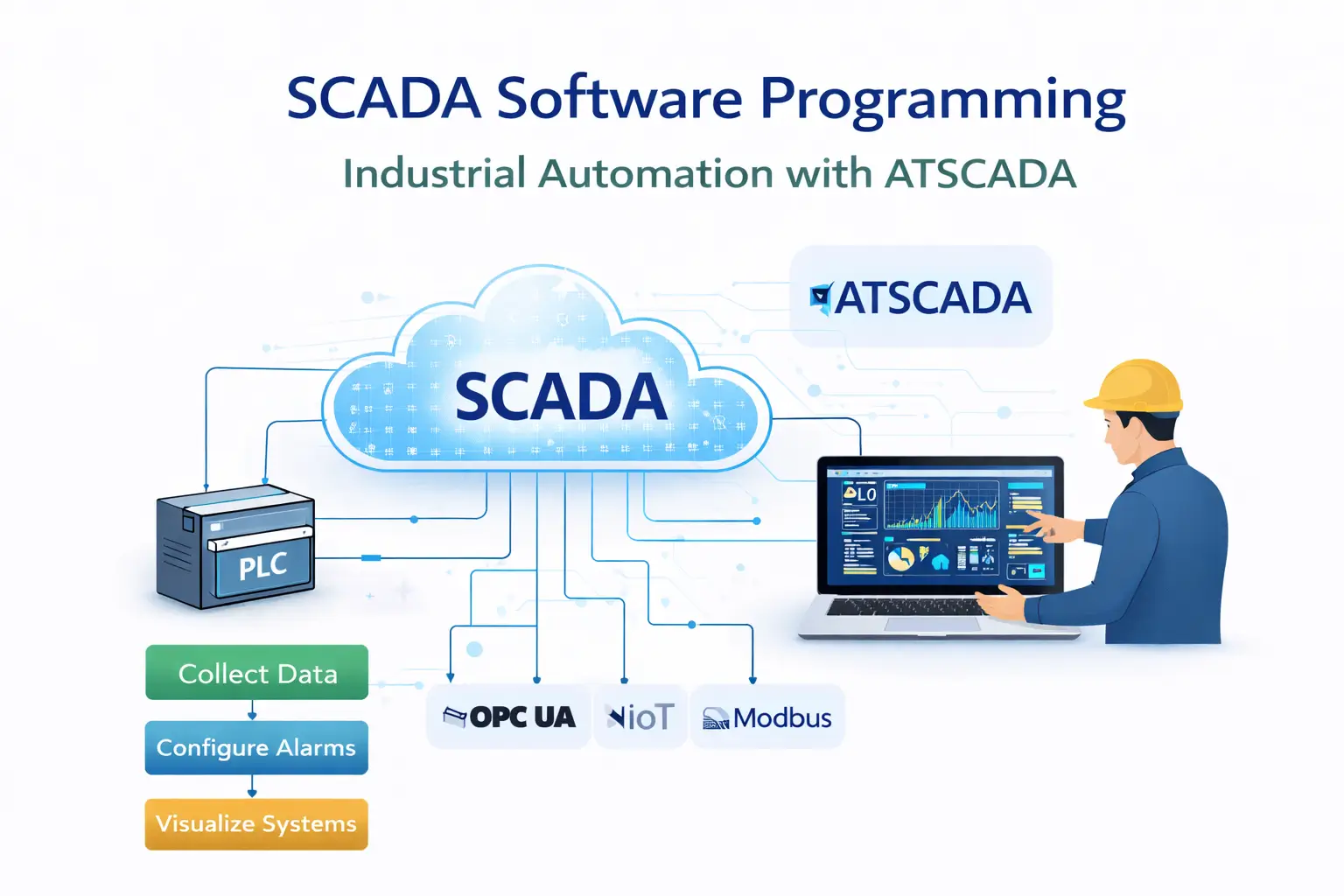
As industrial systems become more connected and data-driven, scada software programming plays a critical role in enabling efficient monitoring, control, and automation. It is no longer just about visualizing data—modern SCADA programming involves designing intelligent systems that integrate seamlessly with PLCs, IoT devices, and cloud platforms.
For engineers and system integrators, understanding SCADA programming is essential to building flexible and scalable automation solutions. Platforms like ATSCADA are transforming how developers approach this process by offering open architecture, web-based access, and powerful integration capabilities.
In this guide, we’ll explore the fundamentals of scada software programming, key techniques, and how ATSCADA enhances development efficiency.
What Is SCADA Software Programming?
SCADA software programming refers to the process of configuring, developing, and customizing SCADA systems, including open SCADA software free download solutions, to monitor and control industrial operations.
This includes:
- Designing user interfaces (HMI dashboards)
- Configuring communication with field devices
- Setting up data acquisition and storage
- Implementing alarms and automation logic
Unlike traditional systems, modern SCADA programming focuses on interoperability and scalability.
Core Components in SCADA Programming
Human-Machine Interface (HMI)
The HMI is where operators interact with the system. Effective SCADA programming ensures that dashboards are:
- Clear and intuitive
- Real-time responsive
- Customizable for different roles
Data Acquisition Layer
This layer collects data from sensors, PLCs, and devices. Programmers must ensure:
- Reliable communication
- Accurate data mapping
- Efficient data handling
Communication Protocols
SCADA systems rely on multiple protocols such as:
- OPC UA
- Modbus
- MQTT
Proper configuration is essential for seamless integration.
Why SCADA Software Programming Matters
Enabling Real-Time Control
With proper scada software programming, operators can monitor and control processes instantly, improving operational efficiency.
Supporting Industrial Integration
Modern industries require systems that connect PLCs, IoT devices, and enterprise platforms, especially in free open SCADA industrial automation environments.
Enhancing Data-Driven Decisions
Well-designed systems provide valuable insights through:
- Historical data
- Trend analysis
- Predictive maintenance
Challenges in SCADA Software Programming
Despite its importance, scada software programming can be complex.
Integration Complexity
Connecting multiple devices and protocols often requires deep technical expertise.
Scalability Issues
Poor system design can limit expansion as operations grow.
Maintenance Difficulties
Without proper structure, systems become hard to update and maintain.
Security Concerns
Industrial systems must be protected against cyber threats.
ATSCADA: Simplifying SCADA Software Programming
ATSCADA provides a modern approach to scada software programming, addressing common challenges while improving flexibility and performance.
Open Architecture for Developers
ATSCADA supports open standards, allowing developers to integrate various systems without vendor lock-in.
Web-Based Development Environment
Developers can build and manage SCADA systems through web interfaces, eliminating the need for complex installations.
Real-Time Data Processing
ATSCADA ensures fast and reliable data handling, enabling accurate monitoring and control.
Scalable System Design
The platform allows systems to grow without requiring complete redesigns.
Key Techniques in SCADA Software Programming
Modular System Design
Breaking systems into modules improves:
- Maintainability
- Scalability
- Development speed
Efficient Tag Management
Organizing data points (tags) properly helps reduce complexity and improve performance.
Alarm and Event Configuration
Setting up intelligent alarms ensures quick responses to system changes.
Data Visualization Optimization
Clear dashboards improve operator efficiency and reduce errors.
Real-World Applications of SCADA Programming
SCADA programming is widely used across industries:
- Manufacturing automation
- Energy and utilities
- Water treatment systems
- Oil and gas operations
Each application requires customized programming to meet specific operational needs.
Best Practices for SCADA Software Programming
Keep Systems Flexible
Design systems that can adapt to future changes.
Prioritize Security
Implement access control and secure communication.
Optimize Performance
Ensure efficient data handling and system responsiveness.
Plan for Scalability
Design architectures that support growth.
The Future of SCADA Software Programming
The future of scada software programming is driven by emerging technologies:
- Industrial IoT (IIoT)
- Cloud-based SCADA
- Artificial intelligence
- Edge computing
ATSCADA continues to evolve with these trends, enabling developers to build smarter and more connected systems.
Conclusion
SCADA software programming is a fundamental skill for building modern industrial automation systems. It enables real-time monitoring, seamless integration, and data-driven decision-making.
While traditional approaches can be complex, platforms like ATSCADA simplify development by providing open architecture, scalability, and web-based accessibility.
If you’re looking to design efficient and future-ready SCADA systems, mastering scada software programming with ATSCADA is the right step forward.
ATSCADA - Smart SCADA Software with AI Predictor & Blockchain. ATSCADA is an advanced SCADA software platform for real-time monitoring, intelligent control, and efficient data acquisition. It is ideal for Industrial IoT (IIoT), smart cities, integrated automation systems, and Agriculture 4.0. With a built-in AI Predictor, ATSCADA enables predictive analytics to detect issues early, optimize performance, and reduce downtime. The integration of Blockchain technology ensures secure, transparent, and tamper-proof data management. Highly scalable and easy to integrate, ATSCADA is trusted by businesses to enhance productivity, strengthen cybersecurity, and accelerate digital transformation.
Related articles
Utility SCADA Systems for Power, Water, and Infrastructure Management
In today’s rapidly evolving industrial landscape, Utility SCADA Systems play a critical role in managing [...]
Apr
Cost of a SCADA System: Complete Pricing Guide
Understanding the Cost of a SCADA System is essential for businesses planning to implement or [...]
Apr
SCADA Software Price: Complete Cost Guide for Industrial Systems
Understanding SCADA software price is essential for any organization planning to implement or upgrade industrial [...]
Apr
Cheap SCADA Software for Small and Medium Businesses
In today’s competitive industrial landscape, small and medium businesses (SMBs) are under constant pressure to [...]
Apr
Low Cost SCADA Solutions for Efficient Industrial Automation
In today’s competitive industrial landscape, companies are under constant pressure to improve efficiency while minimizing [...]
Apr
Ignition SCADA and AI: Integrating Intelligent Automation into Modern SCADA Systems
In modern industrial environments, Ignition SCADA and AI are increasingly combined to move beyond traditional [...]
Apr