
Technical Guides
SCADA Web Application: Modern Solutions for Industrial Monitoring
In today’s fast-evolving industrial landscape, digital transformation is no longer optional—it is essential. One of the most significant advancements in industrial automation is the emergence of the SCADA Web Application. Unlike traditional SCADA systems that require dedicated software installations, web-based SCADA solutions enable users to monitor and control processes directly through a web browser.
This shift is redefining how industries manage operations, improve efficiency, and ensure system reliability. In this article, we explore the concept of SCADA web applications, their key benefits, and how they integrate with advanced platforms like ATSCADA to deliver powerful industrial monitoring solutions.
What is a SCADA Web Application?
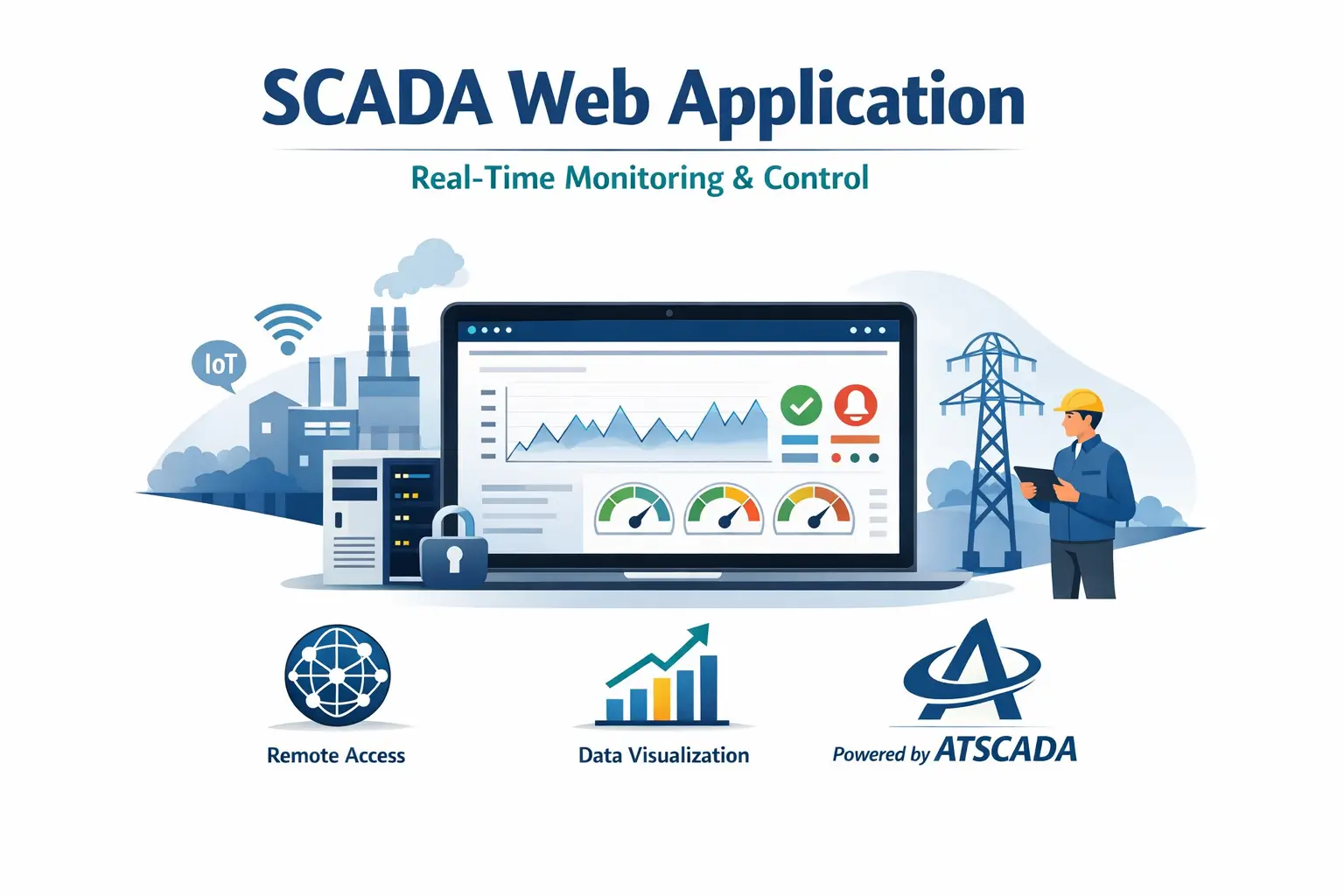
A SCADA Web Application is a modern approach to Supervisory Control and Data Acquisition systems that operates through web technologies. Instead of relying on local installations, users can access system dashboards, data visualization, and control interfaces via browsers on any device.
Key characteristics include browser-based access, real-time monitoring, and advanced control web SCADA capabilities across connected devices :
- Browser-based access (no installation required)
- Real-time data monitoring and control
- Cross-platform compatibility (PC, tablet, mobile)
- Centralized data management
- Secure remote access
This architecture makes SCADA systems more flexible and scalable compared to traditional desktop-based solutions.
Why SCADA Web Applications Matter in Modern Industry
Industries are becoming increasingly connected, and operational efficiency depends heavily on real-time insights. SCADA web applications play a crucial role in enabling this transformation.
Remote Monitoring Anytime, Anywhere
With web-based SCADA, engineers and operators can access systems from anywhere with an internet connection. This is particularly valuable for:
- Distributed industrial plants
- Smart cities
- Renewable energy systems
- Water treatment facilities
Reduced Deployment Costs
Traditional systems often require expensive licenses, while free web SCADA options can reduce entry costs through centralized browser-based deployment.. A SCADA web application eliminates these costs by centralizing the system on a server.
Improved Scalability
As your system grows, web-based SCADA solutions can easily scale without requiring significant infrastructure changes.
Core Features of a SCADA Web Application
Real-Time Data Visualization
Operators can monitor system performance using dynamic dashboards, charts, and alarms. This helps in identifying issues quickly and making informed decisions.
Alarm Management
Modern SCADA web applications provide advanced alarm systems with notifications via:
- SMS
- Web alerts
Data Logging and Reporting
Historical data storage allows businesses to analyze trends and optimize performance over time.
User Access Control
Role-based access ensures that only authorized personnel can control critical operations.
How ATSCADA Enhances SCADA Web Applications
ATSCADA is a powerful platform designed to maximize the potential of SCADA web applications. It combines flexibility, performance, and user-friendly design to deliver a comprehensive industrial monitoring solution.
Key Advantages of ATSCADA
- High-performance real-time data processing
- Intuitive web-based interface
- Easy integration with PLCs and IoT devices
- Strong cybersecurity features
- Customizable dashboards
By leveraging ATSCADA, businesses can deploy a robust SCADA web application tailored to their specific needs.
SCADA Web Application Architecture
Understanding the architecture helps clarify why web-based SCADA systems are so efficient.
Typical Architecture Components
1. Data Acquisition Layer
- Sensors and PLCs collect real-time data from industrial processes.
2. Server Layer
- Central server processes and stores data.
- Runs SCADA software like ATSCADA.
3. Web Client Layer
- Users access the system via web browsers.
- Displays dashboards and control panels.
This architecture ensures seamless communication between devices and users.
Benefits of SCADA Web Applications
Flexibility and Accessibility
Users can log in from any device without installing software, making operations more agile.
Enhanced Collaboration
Multiple users can access the system simultaneously, improving teamwork and decision-making.
Faster Deployment
Web-based systems can be deployed quickly compared to traditional SCADA solutions.
Easy Maintenance
Updates are applied centrally, eliminating the need to update individual client machines.
Use Cases of SCADA Web Applications
Manufacturing
Monitor production lines, track machine performance, and reduce downtime.
Energy Management
Manage power distribution systems and monitor renewable energy sources.
Water and Wastewater
Control treatment processes and ensure compliance with environmental standards.
Smart Buildings
Integrate HVAC, lighting, and security systems into a centralized platform.
Best Practices for Implementing a SCADA Web Application
Ensure Strong Security
- Use HTTPS protocols
- Implement firewalls and VPNs
- Apply role-based access control
Optimize Network Performance
A stable and high-speed network is essential for real-time monitoring.
Design User-Friendly Interfaces
Clear dashboards improve usability and reduce operator errors.
Regular System Maintenance
Keep the system updated to ensure optimal performance and security.
Future Trends in SCADA Web Applications
The future of SCADA web applications is closely tied to emerging technologies:
Integration with IoT
More devices are becoming connected, enabling smarter data collection.
Cloud-Based SCADA
Cloud deployment offers scalability and reduces infrastructure costs.
AI and Predictive Analytics
Advanced analytics will allow systems to predict failures before they occur.
Mobile-First Interfaces
Optimized mobile dashboards will enhance accessibility for field operators.
Conclusion
The SCADA Web Application represents a major leap forward in industrial automation. By enabling real-time monitoring, remote access, and scalable architecture, it empowers businesses to operate more efficiently and make smarter decisions.
When combined with advanced platforms like ATSCADA, these systems become even more powerful—offering flexibility, security, and high performance tailored to modern industrial needs.
As industries continue to embrace digital transformation, adopting a SCADA web application is not just an upgrade—it is a strategic necessity for staying competitive in the modern era.
👉 Learn More about Industrial System

ATSCADA - Smart SCADA Software with AI Predictor & Blockchain. ATSCADA is an advanced SCADA software platform for real-time monitoring, intelligent control, and efficient data acquisition. It is ideal for Industrial IoT (IIoT), smart cities, integrated automation systems, and Agriculture 4.0. With a built-in AI Predictor, ATSCADA enables predictive analytics to detect issues early, optimize performance, and reduce downtime. The integration of Blockchain technology ensures secure, transparent, and tamper-proof data management. Highly scalable and easy to integrate, ATSCADA is trusted by businesses to enhance productivity, strengthen cybersecurity, and accelerate digital transformation.
Related articles
Utility SCADA Systems for Power, Water, and Infrastructure Management
In today’s rapidly evolving industrial landscape, Utility SCADA Systems play a critical role in managing [...]
Apr
Cost of a SCADA System: Complete Pricing Guide
Understanding the Cost of a SCADA System is essential for businesses planning to implement or [...]
Apr
SCADA Software Price: Complete Cost Guide for Industrial Systems
Understanding SCADA software price is essential for any organization planning to implement or upgrade industrial [...]
Apr
Cheap SCADA Software for Small and Medium Businesses
In today’s competitive industrial landscape, small and medium businesses (SMBs) are under constant pressure to [...]
Apr
Low Cost SCADA Solutions for Efficient Industrial Automation
In today’s competitive industrial landscape, companies are under constant pressure to improve efficiency while minimizing [...]
Apr
Ignition SCADA and AI: Integrating Intelligent Automation into Modern SCADA Systems
In modern industrial environments, Ignition SCADA and AI are increasingly combined to move beyond traditional [...]
Apr